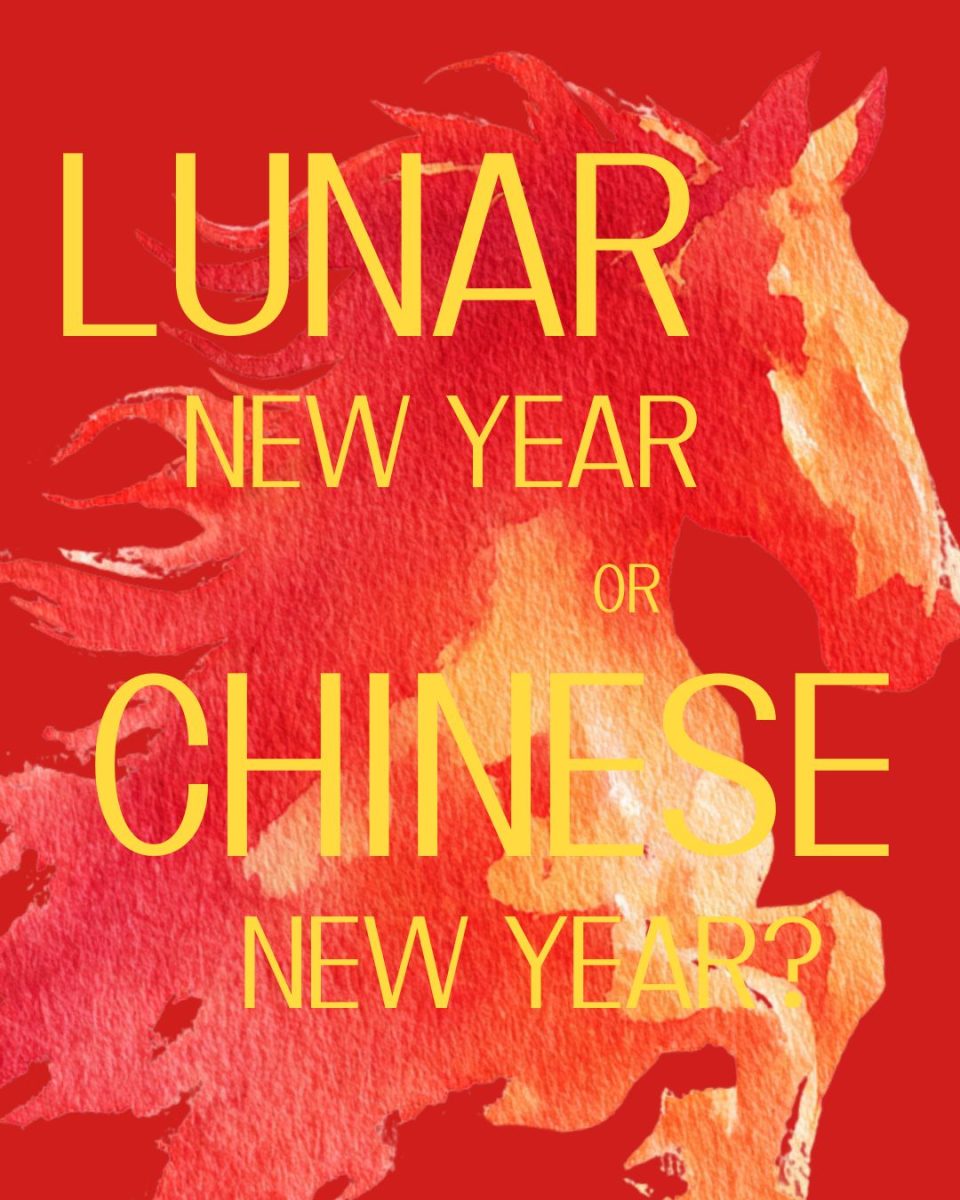
This year, the debate over “Chinese New Year” versus “Lunar New Year” went viral on social media. On the surface, it appears to be a simple dispute over the name of a widely celebrated festival, but it actually implies a broader issue in modern society: who has the right to “name?”
The first time the term “Lunar New Year” appeared in the Western Hemisphere was in a legal document in British Hong Kong. The Holidays (Amendment) Ordinance 1968 replaced “Chinese New Year” with “Lunar New Year.” The ordinance appeared during a period when the colonial government was attempting to stabilize Hong Kong after the 1967 riots and manage tensions surrounding Chinese political influence. In this context, the intention can be interpreted as British de-influencing Hong Kong from China while reinforcing its colonization.
Many thought that calling the festival “Lunar New Year” ensures inclusiveness, as other Asian countries, such as Korea and Vietnam, celebrate the festival as well. However, it actually obscures its origin and alienates the cultures celebrating.
One misconception is that many perceive the holiday is celebrated according to the Lunar calendar. Dating back to the Shang Dynasty (~3500 years ago), 春节(Chūn Jíe, Spring Festival) was first celebrated to mark the end of winter and the start of spring. Due to China’s agrarian culture, the festival is based on the Lunisolar calendar, not solely the Lunar calendar. The Lunisolar calendar tracks both the moon’s phases and the Earth’s orbit around the sun. The Lunar calendar (The Islamic (Hijri) calendar) is widely used in Muslim culture, which only tracks moon phases. According to that, the actual “Lunar New Year” is celebrated in June, while the “Chinese New Year” is celebrated in late January or February. Therefore, describing the holiday simply as a “Lunar New Year” is conceptually inaccurate and creates confusion about both the date and the cultural tradition to which it belongs.
“Chinese New Year” is not just a name; it represents rituals and culture that originated in China and are shared among Asian countries. Let’s explain it with the English language in the United States. Although English has undergone significant changes since the settlers brought it to the United States—the accent, spelling, and different meanings for the same words—English is still referred to as such because it retains the fundamentals of that specific language. Similarly, though people in different countries celebrate Chinese New Year differently, the same date, traditional food (e.g., 年糕, rice cake, 饺子, Jiaozi, and 汤圆, Tangyuan), and rituals are adapted or directly inherited from Chinese culture. Calling the festival the Chinese New Year does not diminish inclusiveness; rather, it acknowledges the historical influence of Chinese culture across East Asia.
Inclusiveness is never about the name; it is about the equal respect and recognition for different cultures. When you say “Happy Lunar New Year” to a native Chinese, they might not even understand what you are referring to. Growing up in China, the festival was only referred to as 春节 (Spring Festival) or 农历新年(Nongli Xinnian, or Lunisolar New Year). Calling a name that a person from that culture will not understand does not demonstrate inclusiveness. When referring to Latino Celebrations, such as Cinco de Mayo and Día de los Muertos, people usually call them by their original names, even though they are now celebrated across the world.
The practice of renaming cultural traditions is often rooted in colonial history. Colonizers frequently created simplified or “understandable” labels for unfamiliar cultures, which weakens the connection between the tradition and its origins. In some cases, people even deny the Chinese roots of this festival. When Chinese communities attempt to reclaim the cultural identity of the holiday, why should they bear the burden of proving something that is historically theirs?
A similar controversy can be seen in the debate over the “Gulf of Mexico” versus the “Gulf of America.” The Gulf is named after the Mexica (Aztecs), the indigenous people who founded the region that became Mexico City. Spanish explorers standardized the name in the 16th century because the body of water bordered the administrative heart of their New World territory. That name was changed to the Gulf of America in some maps in 2025, which is vague because “America” can mean the “United States of America,” the North American continent, or the entire American continent.. On the other hand, the Lunar New Year also demonstrates that ambiguity. It is inclusive because it sounds to represent all the countries, but it is also exclusive because it tells nothing about its origins, traditions, or who celebrates it.
Some might argue that “Chinese New Year” is also ambiguous: does “Chinese” refer to culture, language, ethnicity, or nationality? While it is still vague based on different interpretations, it is more historically grounded compared to “Lunar New Year.” Labelling and categorizing—simply saying that a festival is influenced and reframed by one culture—is an act of oversimplification that flattens complex histories and living traditions. In reality, migration, culture exchange, and colonization all directly or indirectly facilitated integration; distinguishing certain terms can prevent cultural appropriation.
Thus, calling the festival in the mother tongue is encouraged as it honors the roots and specifies the cultural difference, whether it is 春节 in Chinese, Seollal (설날) in Korean, or Tết in Vietnamese. Knowing that Asia is never an area that all share the same culture. They came from the same origin, but as time passed, different countries developed into various cultures that created the diversity and vibrancy.