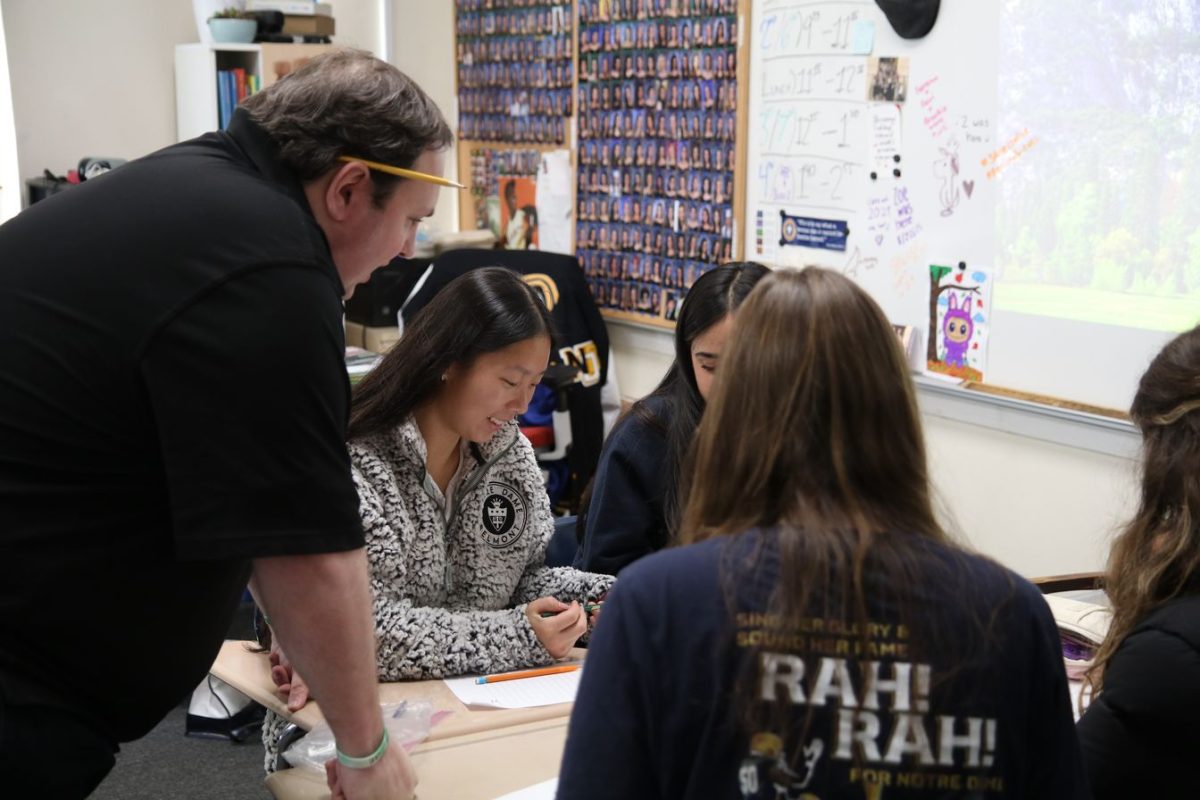
In school, students are constantly adjusting how they sound, especially when speaking to teachers, shifting their tone and word choice to fit expectations. This creates what many students think of as a “teacher voice,” a more formal way of speaking that differs from how people naturally communicate, often shaping not just what people say, but how they present themselves in academic settings.
A major part of this “teacher voice” comes from changes in tone, word choice and delivery. When speaking to teachers, students often adopt a softer tone, sometimes even sounding more polite than they normally would. Language can also become more formal, avoiding slang or casual phrases used with friends. This reflects a form of code-switching, where communication shifts depending on the audience. Just as people speak differently to friends than to adults, students adjust how they sound in academic settings, often without realizing how much their voice has changed.
Over time, this shift can make communication feel more performative than authentic, as students may begin to present a version of themselves that aligns with what they believe teachers expect, rather than how they would naturally express their ideas. This creates a divide between a student’s real voice and their academic voice, reinforcing the idea that sounding intelligent or formal is more important than the substance of what is being said.
Another reason the “teacher voice” has become so important is that the way students present themselves is often tied to how they are perceived. The way someone speaks can influence whether they are seen as intelligent or capable, even if their ideas are strong on their own. Because of this, people may focus more on sounding formal or “correct,” rather than expressing their thoughts clearly. This can reinforce the idea that presentation matters just as much as or even more than the actual content of what is being said, making communication in school feel more like something to be judged, than a way to share ideas.
However, learning to adjust the way you speak for different audiences is also a valuable skill and can help students express themselves more effectively in a variety of situations, including future professional settings. In this way, the “teacher voice” is not just a limitation, but also a tool that can prepare students for real-world interactions.
Ultimately, the “teacher voice” reflects how communication can shift based on expectations in different settings, making it both a performance and a skill. It can distance people from their natural way of speaking, but it also prepares them to communicate effectively, showing that learning to balance these two sides is key.