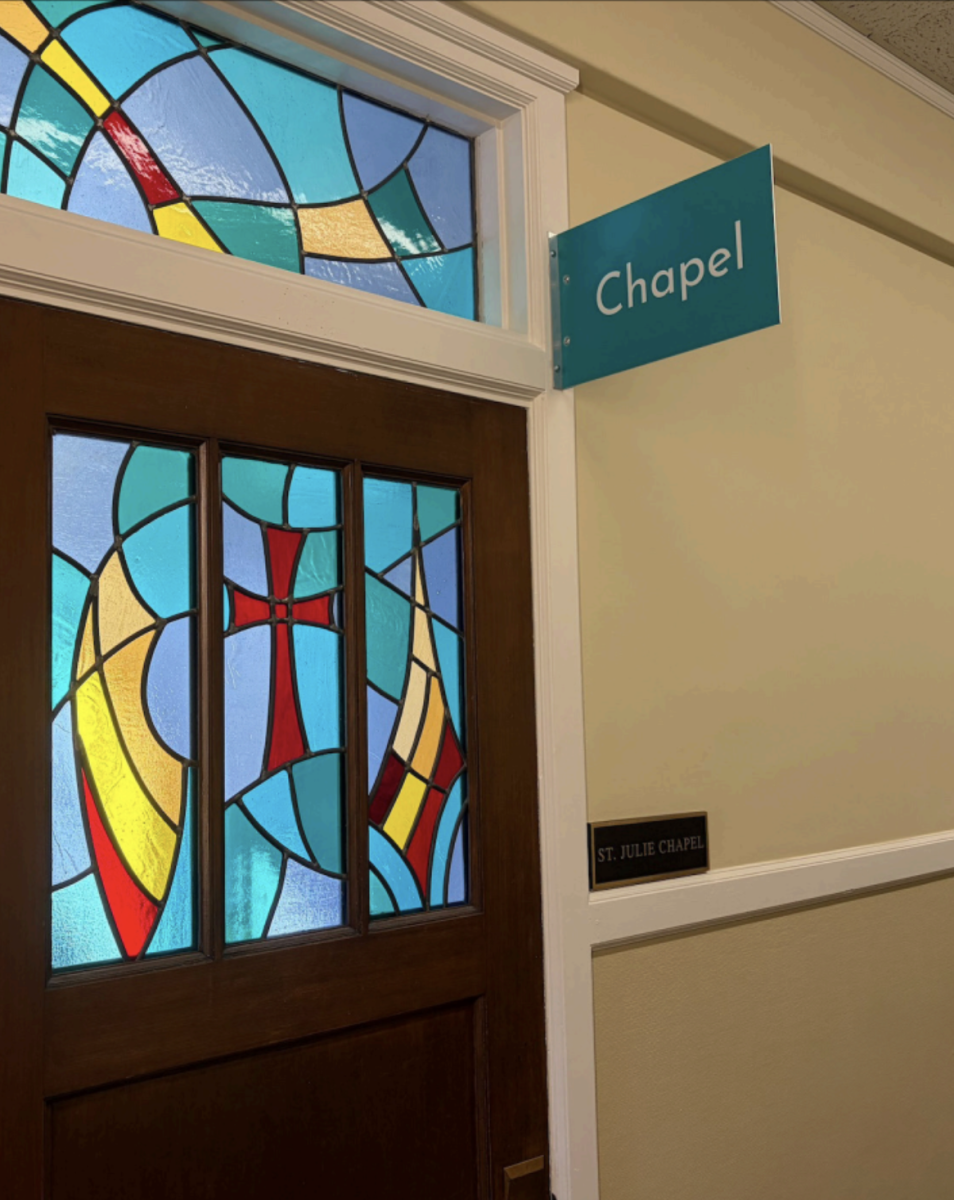
After a great deal of hard work, dedication and long hours committed to school and beyond, many teachers decide where they want to work. These decisions might include, but are not limited to, choosing between a public or private school, co-ed or single-gender and religious or non-faith-based. Educators at NDB made a conscious decision to be part of a Catholic community. Teachers often choose Catholic schools because of the values, environment and sense of community they provide.
One teacher who shared her experience is Isabel Haithcox, who teaches AP Chemistry, Living by Chemistry and Forensic Science. When asked why she chose to be part of a Catholic school rather than a non-religious one, she explained that her background played a large role in her decision.
“I did attend Catholic High School as a student. I am Catholic originally, and so it felt like home at the university,” Haithcox said.
Beyond personal background, many teachers are drawn to the strong sense of mission and belonging at Catholic schools. Haithcox explained that when she was searching for a new teaching position, she explored multiple options but felt most connected to NDB. The sense of unity is something that sets Catholic schools apart from larger public schools, where teachers may not feel the same tight-knit connection to the school community.
Haithcox continued, “NDB was the only place that felt like home, where I felt I really understood the mission of St. Julie and the community and the feeling of being one family.”
Another perspective comes from Jennifer Dorn, who has over 32 years of teaching experience and has worked in both public and private schools. Dorn explained that Catholic education is familiar to her and deeply meaningful. This sense of comfort and familiarity can be especially important for teachers who want to feel supported in their workplace.
“I am a product of Catholic education, and so it’s kind of what I know, and it makes me feel at home,” Dorn stated.
Community is another major factor that draws educators to NDB specifically. Dorn first became connected to the school as a parent volunteer, during which she worked closely with students on numerous events, including the Senior Spotlight. She wanted to highlight the importance of feeling at home and how that inspired her to become even more involved with the NDB family.
Reflecting on that experience, Dorn said, “I really enjoyed how we could engage in conversation, and they shared stories with kind of a total stranger, and it actually inspired me to want to come in and work here and be a part of this wonderful community.”
Compared with public schools, Catholic schools like NDB often have smaller classes, closer connections and shared values. Teachers can give more individualized attention and notice when students are struggling. A faith-based environment creates a focused, supportive space, with community and belonging central to NDB’s mission.
NDB staff choose to work here not just because it is a school, but because it is a community. Whether it is shared Catholic values, close relationships with students or a sense of belonging these factors strongly influence why educators choose a Catholic high school over a public or nonreligious one.