Opioids are synthetic and semi-synthetic drugs that are used with or without a prescription. These highly addictive substances are commonly used to treat pain during or after major ailments such as cancer treatment, sports injuries and vehicle crashes. However, many patients misuse the drug or accidentally swallow too much, creating an addiction.
According to Yale Medicine, when an opioid enters the body, it stimulates the brain and relieves pain. While it helps mitigate symptoms, the drug has the complex power to create a surge of euphoria or happiness. This double standard can be lethal.
Patients may double their dosage to chase the same “high” they first experienced or continue misusing the opioid to combat withdrawal symptoms. Eventually, users are unable to stop their craving, creating an addiction.
When patients become addicted, they open the door to an overdose. An opioid overdose occurs when a user consumes or injects an intolerable amount of the drug, leading to shallow breathing or death.
Symptoms
During an overdose, the user’s skin becomes dull or greyish blue. The patient is unresponsive to their name but maintains shallow breathing. One of the most important parts in identifying an overdose involves the way a patient breathes. If the overdoser does not have a pulse, start CPR; however, if they have low breathing, there is a solution.
Narcan
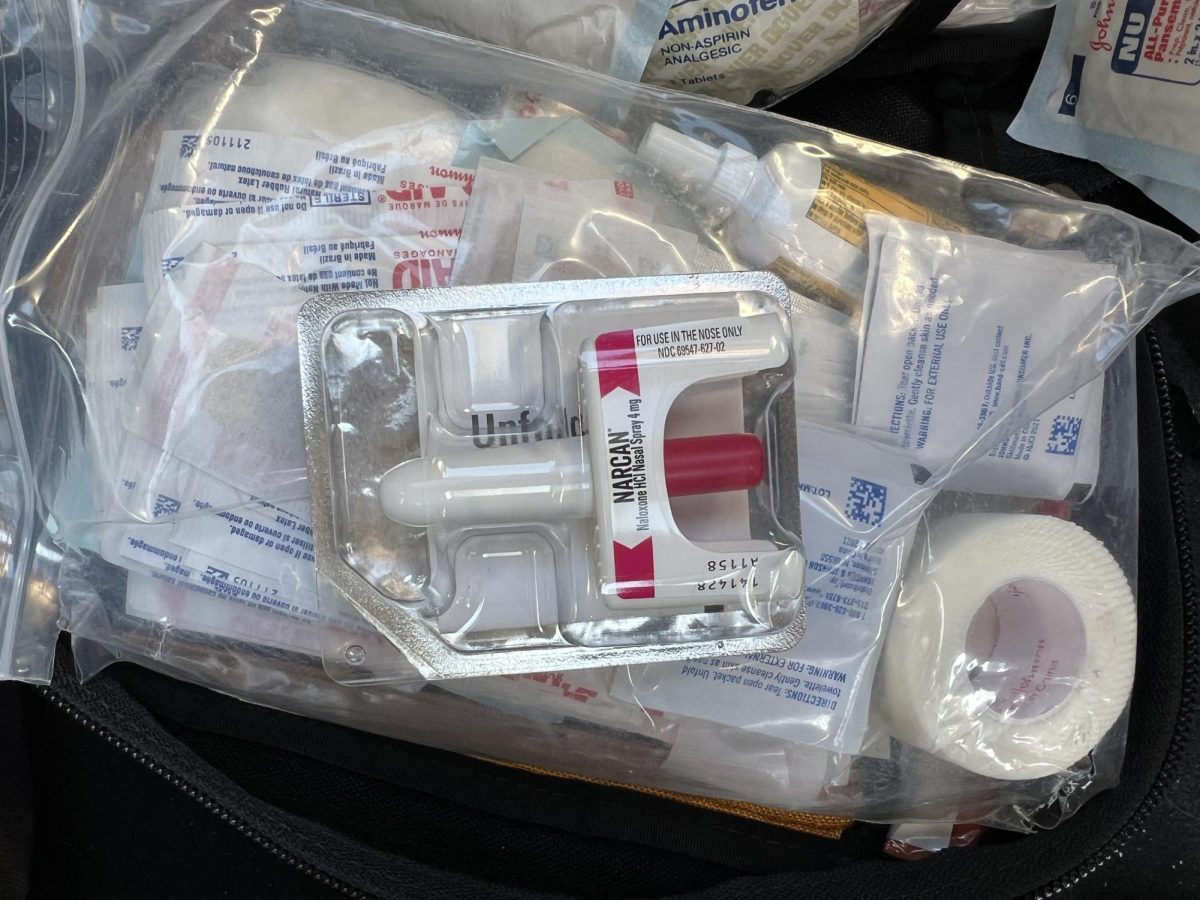
Narcan, also known as Naloxone, combats an overdose by reversing the effects of an opioid. One of the most common methods to administer Narcan is via a nasal spray.
Administering
If you suspect someone is overdosing, hold the Narcan spray with the middle and ring fingers on the top part of the bottle. Insert the tip of the spray into one of the patient’s nostrils. Then, use your thumb to push the medication up; this sprays the Narcan into the nostril.
To learn more about First Aid for Opioid Overdoses, visit the CDC or American Red Cross websites.