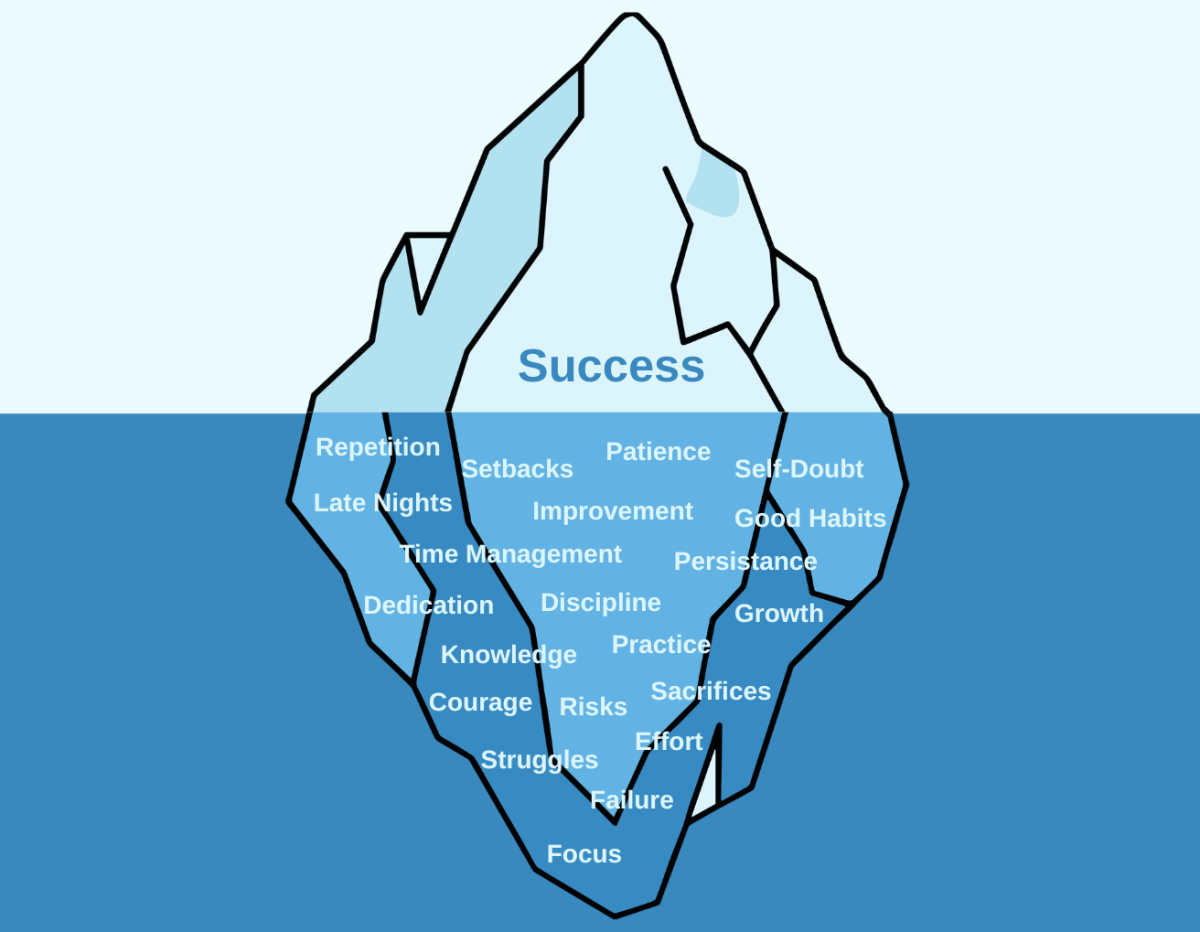
In a world focused on outcomes, the effort behind success often goes unnoticed. Whether in school, relationships, or even everyday life, people tend to judge based on what is visible rather than the work behind it. Because of this, effort can feel invisible, even when it plays a major role in shaping outcomes, often going unrecognized simply because it is not immediately apparent.
In school, the way effort is recognized does not always reflect how much work actually goes into it. Hours of studying, reviewing notes, and preparing for assessments are often reduced to a single number or letter. When that result does not reflect the amount of effort put in, it can feel as though the work itself did not matter. Even when understanding improves, that progress is not always visible in a final grade, making it easy for effort to go unrecognized. Over time, this can shift the focus away from learning and toward outcomes alone.
The effort that goes into maintaining relationships is often much less visible than the moments people actually see. Small, consistent acts, like checking in, making time, or even just being supportive, play a major role in keeping connections strong, but they can easily go unnoticed. Instead, attention is often placed on more obvious interactions, rather than the ongoing effort behind them. Because of this, the work required to maintain relationships can feel overlooked, even when it is constant.
Because people tend to focus on what is visible, effort is often judged by its outcome rather than the process behind it. When effort does not lead to immediate success, it can seem as though it has little value, even if significant time or energy was invested in it. This creates the impression that achievements happen easily, without showing the effort that led to them. As a result, it becomes easier to compare outcomes without understanding the work behind them, shifting expectations from appreciating effort to expecting it.
Also, because effort is not always visible, there can be a disconnect between the amount of work put into something and how it is perceived. Two outcomes may appear similar on the surface, even if one requires significantly more time and persistence than the other. Without seeing the process behind them, it becomes difficult to distinguish between consistent and minimal effort, making it easy to assume they are the same.
Over time, this way of thinking can make effort feel less meaningful, since it is rarely acknowledged unless it leads to visible success. When results become the main focus, the process behind them can fade into the background, making it seem as though effort only matters when it produces immediate outcomes. Because so much effort is hidden, it can become easy to compare outcomes without truly understanding what went into them. People may look at someone’s success and think it came easily without seeing the persistence behind it. This creates the illusion that achievements and even strong relationships happen naturally, when in reality they are built through consistent effort. As a result, expectations can become unrealistic because people may compare themselves to results that do not show the full picture.
Ultimately, recognizing effort means shifting focus away from outcomes and toward the process behind them. While results will always matter, they do not reflect the time or consistency that led to them. By placing more value on effort, individuals can gain a more balanced perspective, where growth and progress are recognized alongside achievement. In this way, making effort more visible is not about changing outcomes, but about changing how they are understood.