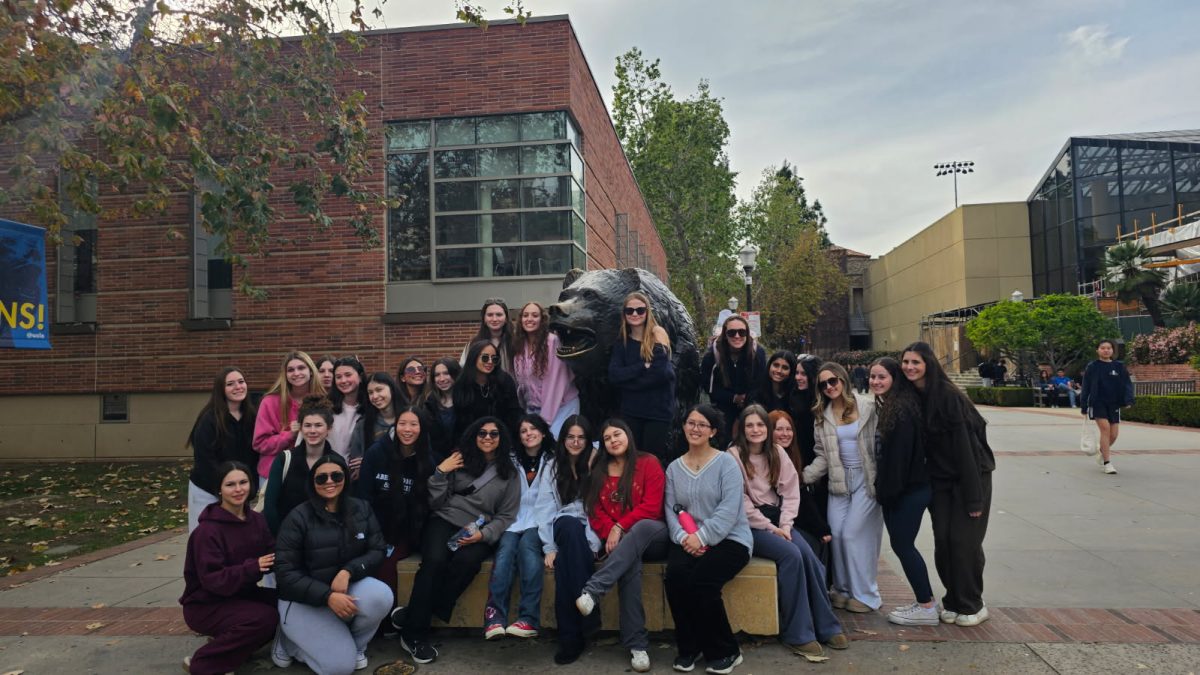
I went into my college visits thinking I already knew where I wanted to go. Schools like UCLA had been built up in my mind for years, and I expected my InterSession trip to confirm that.
Needless to say, I was sorely mistaken.
Before touring, my idea of a “dream school” was mostly based on reputation. Rankings, social media and what I had heard from others shaped my expectations. UCLA and UC Irvine had quite a hold on me, and I could clearly picture myself at both. They seemed to be the kind of schools people choose and talk about with confidence.
But actually walking onto those campuses changed everything.
There was nothing necessarily wrong. The schools were impressive, the facilities were beautiful and everything looked the way I had imagined. But the atmosphere was not what I expected. The size of the campuses, the layout, even just the overall energy stood out in ways I had never considered before.
That shift made me realize how much of my “dream” had been built without experience.

Chapman University was the biggest surprise of the trip. It was not a school I had seriously looked at before, and it was barely on my radar. But by the time I left, it was the one I couldn’t get out of my head.
Part of that came down to things I had never prioritized before. The smaller student-to-teacher ratio made classes feel more discussion-based than overwhelming. The dorms did not have communal bathrooms, which may seem like a small detail, but if I am living somewhere for four years, I definitely want at least a bit of privacy. Even the dining options were noticeable. Instead of generic campus food, the dining options sounded like places I would genuinely like—which, as a picky eater, is pretty rare—making it easier for me to picture myself enjoying the routine of being there.
But one more personal aspect is what truly got me hooked. During the tour, our guide spoke about the Jewish community on campus and the various ways in which students could stay connected to that part of their identity. To know that I could feel welcomed and belong there? Now that is worth more to me than rankings could ever be.
And perhaps the simplest detail proved to be the most telling, as something else that caught my attention was how all the people appeared to be happy. Not busy or stressed, but full of joy just to be walking around campus. That is not something you can measure on a ranking list, but it is something you notice immediately when you are there.
The experience forced me to rethink what I actually want in a college.
School size, class environment, campus culture and everyday quality of life mattered just as much, if not a little more than prestige. These are things that are easy to overlook when you are just scrolling through websites or watching videos online. But in person, they dictate everything about the experience, especially when you are thinking about where you will spend several years of your life.
At the same time, it is important to acknowledge that not everyone has a chance to go and visit colleges in person. Travel is costly, and for many students, it is not feasible. But even without traveling to the campuses, there are still ways to go beyond surface-level impressions, whether that is talking to current students, attending virtual tours or doing deeper research about the life of students on the campuses.
For the few who are able to pay a visit, it can have a strong impact on one’s entire view of their future.
What I thought would be a trip to confirm my choices turned out to be something different. It challenged my assumptions, reshaped my priorities and reminded me that the “right” college is not always the one you expect, but what feels like it can one day be home.