At some point in our lives, we’ve all heard about climate change. Perhaps it was in elementary school, seeing a picture of a sad polar bear on a melting ice floe. Maybe it’s now that we’ve learned about greenhouse gases and have knowledge — extensive or limited — that more is bad. But you see, there is much more to this story…a story unlocking the foundation to confident climate literacy.
What is climate literacy anyway, and why should we care about cultivating it? According to climate.gov, climate literacy is our understanding of the Earth’s climate system and using that knowledge to make decisions for the greater good. But what does that really mean?
You see, climate change is a long-term shift in temperature and weather patterns. With this fact alone, it’s easy to have tunnel vision with the whole concept. Every part of nature is connected. Let’s take a trip to California, a state rife with wildfires. According to the NOAA, human-caused warming trends may be responsible for the increase in wildfires in California because a hotter atmosphere evaporates more water from plant life, making regional dry spells drier.
You would think that with this information and living these effects first-hand, people would be more active in campaigning against the factors driving climate change. But did you know that, according to Nature (2024), 14.8% of the United States’ population believes that climate change is a complete hoax! That’s around 51,800,000 people in the United States alone! Not to mention the growing number of adults and teenagers who get their news feed from misleading media sources.
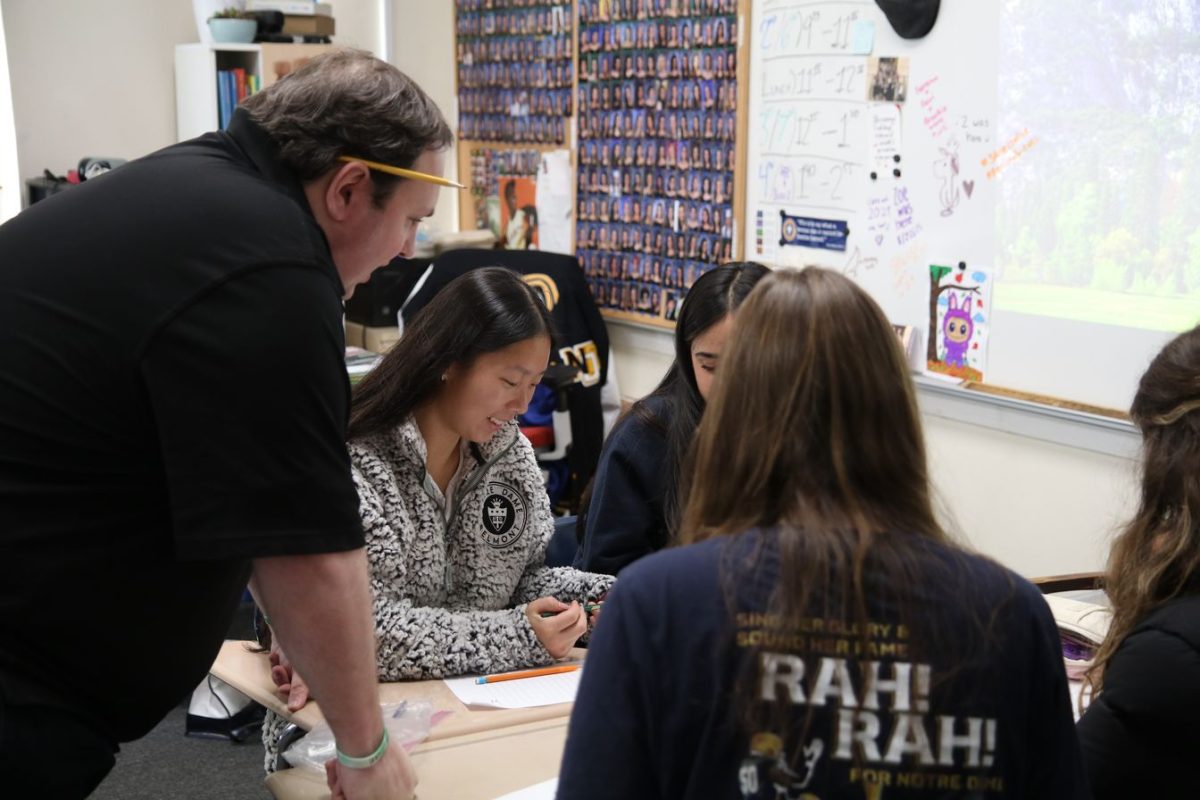
How can we, as students, grow in climate literacy and put sustainable practices in our daily lives? First of all, we can become more active through biology courses and activities at NDB. The AP Bio and Honors Biology teacher, Mrs. Girard, mentioned that, “[In Honors Bio] students take their ecological footprint, explore, and ask questions. In AP Bio, we do citizen science activities, and there are environmental science classes that dive more into climate education.” Furthermore, some of her suggestions to kick off sustainability include “Talking with family on moderating animal protein as this can save lots of resources! Other choices like not necessarily choosing to buy all new stuff: upcycle and thrift! And remember, be more attentive to how much food you waste.”
According to Active Sustainability, as Robert Swan once said, “The greatest threat to our planet is the belief that someone else will save it.” I truly believe that we all need to understand that the adults of this generation, the politicians in power…they are not helping. We are all living in a fallible bubble, thinking that just like everything else, our planet’s future will be solved quietly for us. But this is the painful truth: the Earth is going to fall if we don’t stand up and say something to change our human greed. We must stand up for the greater good of the Earth and its resources so that all generations may have the same or better opportunities than those who came before them. We are the future. We are the only ones who can save our only home.