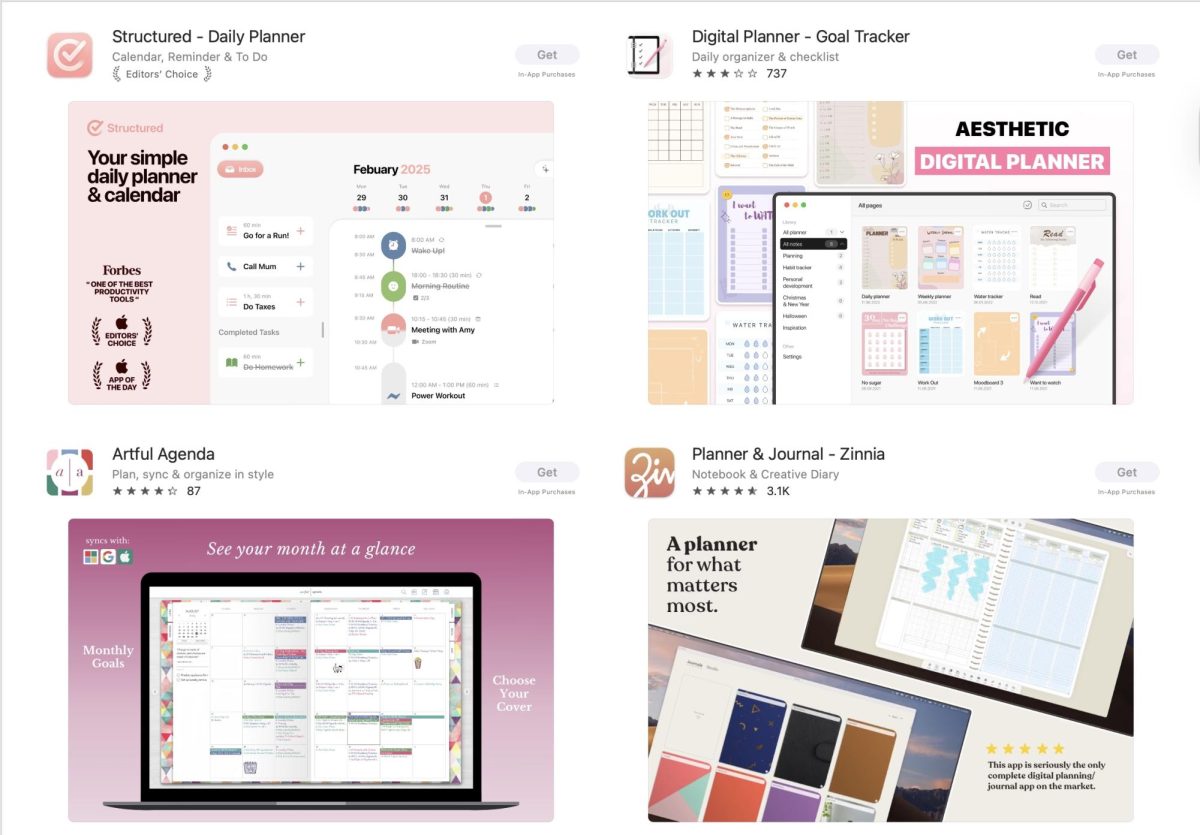
As the second semester kicks off, students are constantly looking for ways to stay more organized, more productive, and overall ways to reduce stress. A very common way that people go about this is by purchasing a planner. Many buy paper planners as they are more visually appealing, but some turn to something more digital and straightforward. An online planner can be the perfect tool to help maintain organization well beyond the first month of the Spring semester.
One reason that these digital planners are more efficient is that they keep everything in one place. With paper, things can get lost, torn, thrown out, and less organized in an instant. One can make sure that their most pressing matters are visible and easily accessible with an online planner. All of the assignments, deadlines, and other forms of reminders are gathered onto one single page, allowing you to clearly see what is due and when without having to flip through a book to find it.
Another reason that digital planners are better is that you can link them to your reminders, calendars, and updates across all of your devices. If you are someone who needs constant reminders in order to get something done or to remember that you have to do something, then this is a foolproof way to make sure that you are on top of everything. Personally, this is the way that I think digital planners are the most useful, and it ensures that I am very rarely scrambling to finish something last-minute.
Some people may think that transferring to an online resource would lose the creative aspect. However, in reality, this is far from the truth. While you do lose the hands-on activity of drawing with pens and markers, you can still add your own personal flair with various colors, backgrounds, and other different visual aspects and settings. That was one thing that I worried about when I was making the transition, but I have found that I never notice myself missing the hands-on portion, which is a direct result of the design aspects you can implement online.
Additionally, digital planners are more accessible. They are portable, which makes it easier to add something on the go, as you do not need to lug an entire physical planner around everywhere you travel. They are also a lot cheaper. Many online options are free for users, and you get the same function from it whether you pay $15-$20 dollars on a fancy, visually pleasing, bulky planner or $0 for a compact, portable, and more environmentally conscious version.
According to Copper Bottom Design Co, an order of 500 planners can cost anywhere from $7,000 to $15,000 to manufacture each paper-back, wire-bound copy. But that is only making the planners themselves. Think about how many trees and resources could be saved for something more substantial, rather than a planner that people will buy and forget about by the end of the first few months of the new year. Next time you go to buy a physical planner, ask yourself: Is it really worth it?
With their diversity, accountability, and online resources, digital planners are exceedingly better and more reliable than paper planners, which is precisely why you should make the switch.