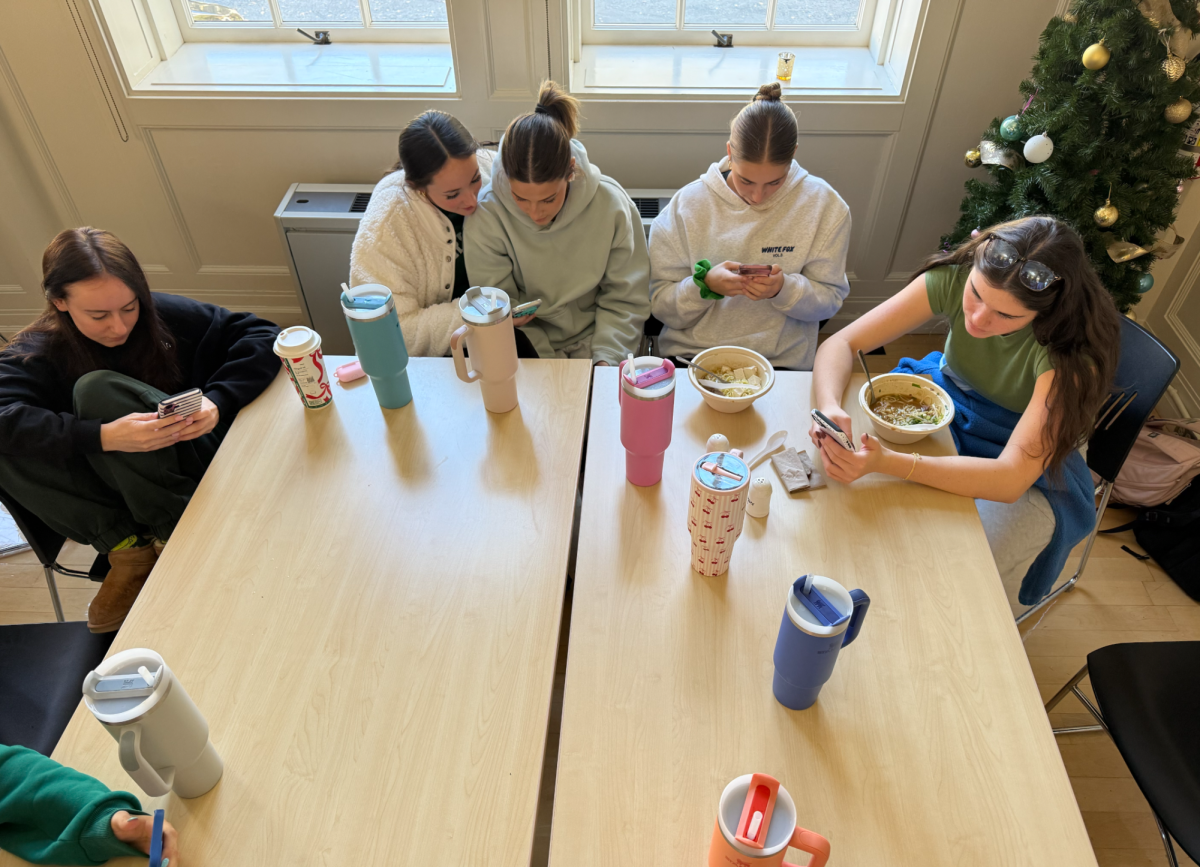
Let’s be honest: Most of us spend more time online than we would like to admit. We scroll, post, repost and refresh constantly. But who are we when the screen turns off? Being “chronically online” is not just about spending too much time on the internet; it is about losing a sense of who we are outside of it.
Everywhere, people my age are curating themselves in every imaginable way. Our personalities are shaped by aesthetics, algorithms and trends that last about as long as a TikTok sound. One week, it is the “clean girl” look; the next, the exact opposite. Online, we reinvent ourselves endlessly, but that constant performance gets exhausting. We end up chasing validation through likes and comments, and when the attention fades, so does our confidence. It is like we have built our entire identities around the expectations of those around us, and are only fulfilled by positive public opinion.
When someone is young, they have not fully developed their sense of self, so it is vital that they are not swayed by the trends of the moment.
The teenage years are formative, and social media and societal pressures cloud the importance of growth and learning as humans. The online atmosphere is the thief of personality and originality. It may have originally been created to be a platform to promote that creativity, but it takes an extremely confident and strong-willed human to actually show their creative side on the internet. The internet is cruel, and gives weak people a place to hide behind their screens and throw hurtful comments without repercussions. So, showing one’s creativity may be the most difficult and vulnerable part of being on social media.
The internet is where we grew up. It is where we found community when we felt misunderstood, where we learned about issues that schools ignored and where we made friends when we could not be together in person. However, it is now hard to distinguish where community ends and dependency begins. When your sense of belonging depends on followers and engagement, you wonder if you can exist without an online audience.
I am not saying we should all delete our accounts and go live on deserted islands, but it is time we admit that being “chronically online” can mess with how we see ourselves. Perhaps the first step is to log off for a bit and remember that identity is not built from trends, but from experiences, relationships and values that can not be measured in views.
What makes the identity crisis even more complicated is how online aesthetics shape who we think we are supposed to be. Every few months, a new “it girl” tends to take over TikTok, whether it be the “clean girl” or “coquette” aesthetic, and suddenly everyone scrambles to fit the mold. It is not just about clothes; it is about acting the part. You are not just dressing “soft girl”; you are expected to embody a “soft girl.” The internet turns self-expression into a long and nearly unachievable checklist.
We can still use the internet to express who we are, but we should also save some of ourselves for real life. If we do not, the line between who we are and who we pretend to be might disappear completely.