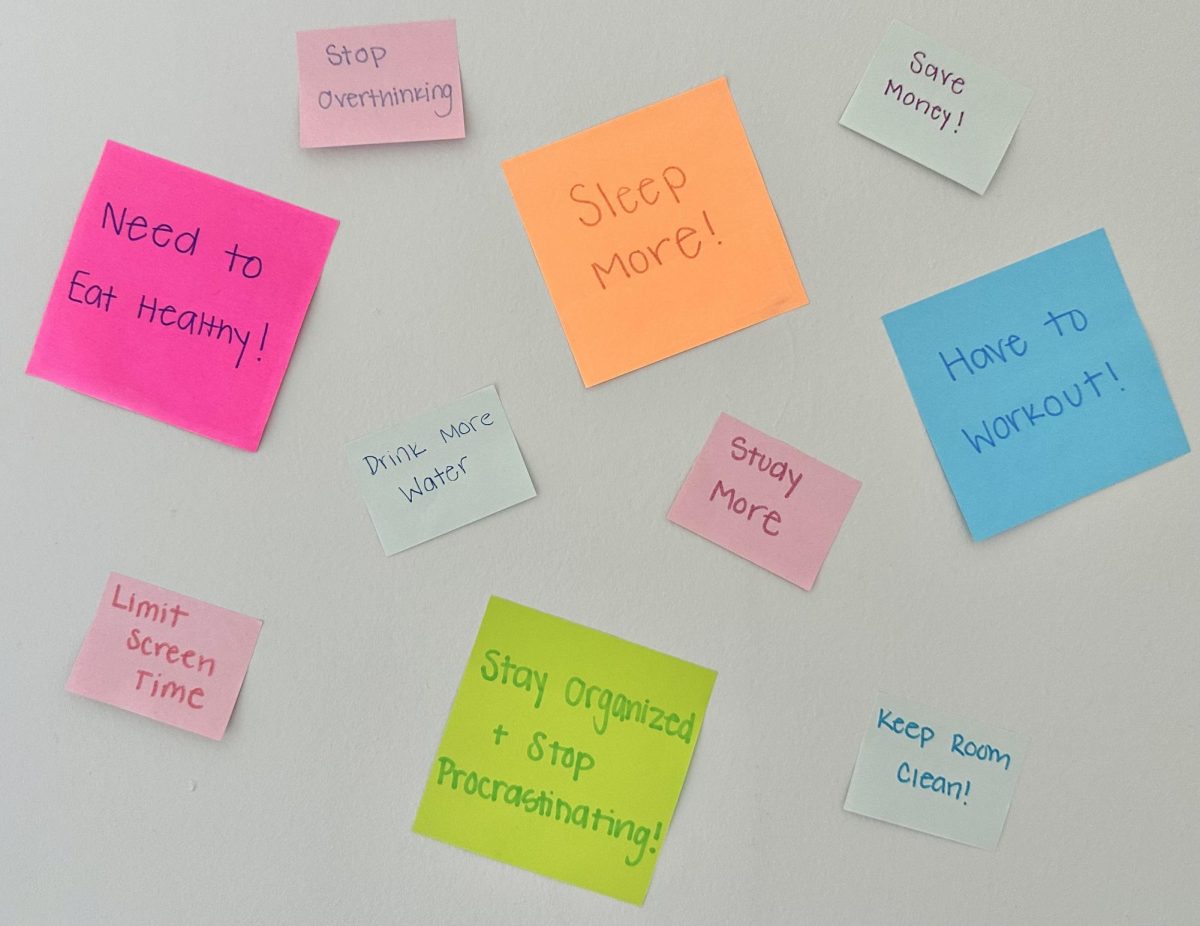
Every January, as the calendar resets for a new year, countless individuals create resolutions to reinvent themselves, though most fade before real change can occur. The same pattern repeats itself: enthusiasm begins to fade, people return to their regular routines and the idea of a “new year” quietly drifts off. This “New Year, New Me” mindset sounds inspiring, but most of the time, it often creates more pressure than actual progress.
Much of this pressure stems from the notion that January is supposed to be a dramatic starting point, making it seem as if people are expected to wake up on the first day of the year as an improved version of themselves, wanting to change all the aspects of themselves they perceive as negative. Some people may feel rushed to make these quick changes, making this an unrealistic expectation that can set them up for disappointment and can lead to frustration when results do not happen instantly. It is essential not to change too much too fast, as overwhelming yourself with unrealistic goals can often hinder actual progress instead of helping it.
This phrase once carried a positive meaning, as it often promotes eating better and improving a person’s lifestyle. However, in the age of social media, it has become more about performance than creating actual change. A large reason for this shift is that people seek validation from others instead of taking accountability themselves to become their better selves.
This motivation can also be based on comparison at times, rather than someone genuinely wanting to improve themselves. Constantly seeing others post their workouts and routines can pressure people to copy those same habits, creating a cycle of comparison, even though it might be unintentional. This kind of motivation can almost push people into a lifestyle they may not have chosen initially, rather than encouraging healthy, lasting change. Not everyone is like this, but over time, this mindset has become a little misconstrued, because trying to change everything all at once is guaranteed to fail.
At times, these resolutions can begin to feel like obligations rather than personal choices. When someone sets goals simply because they see everyone else doing the same, these resolutions can lose their true meaning. Individuals may feel pressured to match expectations set by others, causing them to lose sight of their own motivations and making it much harder to maintain real progress.
It is healthier to focus on small changes at a time instead of trying to fix everything that we think is “wrong” all at once. It is better to focus on consistency. Building better habits comes from steady progress, not a massive reset of dieting and working out at the start of January. This need to self-brand can also lead to perfectionism, making people believe the false narrative that they need to be perfect in all aspects of their lives. Progress is built gradually and can last longer than forcing flawlessness to occur overnight.
True improvement comes from patience and repetition, not having these quick transformations. Change can start small, but what matters most is that it continues and that individuals make genuine efforts toward healthy self-improvement.
It is better to focus on consistency instead of reinvention because real growth comes from evolving, not replacing who we are.