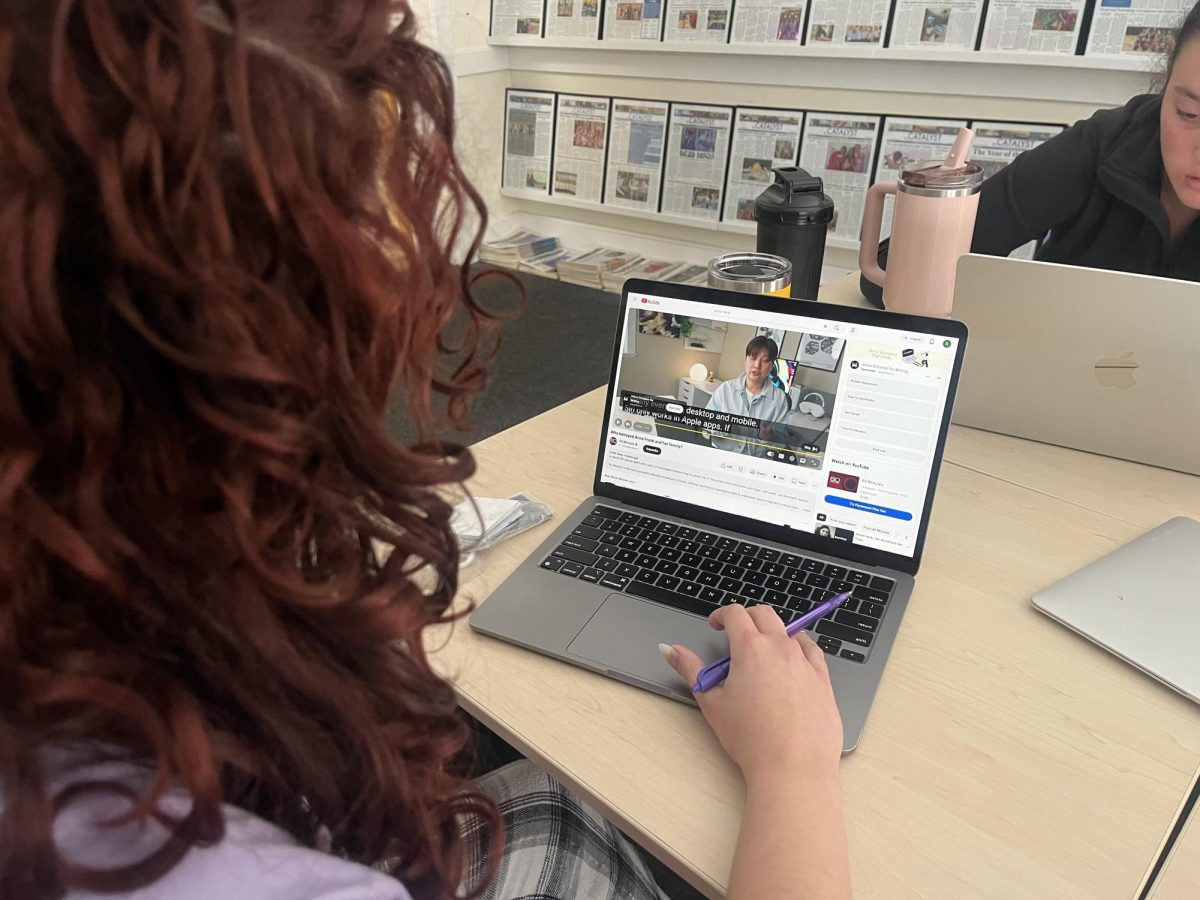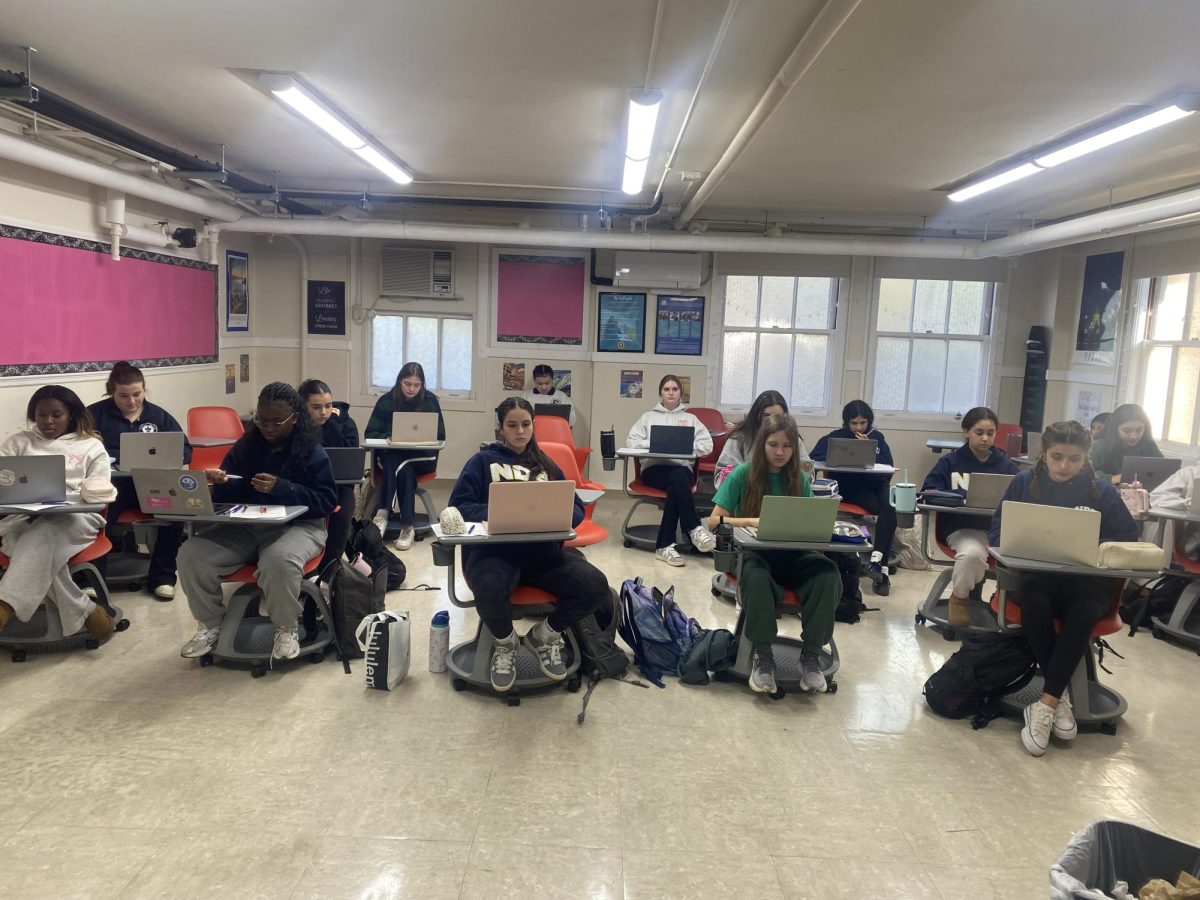
Walk into any classroom at NDB, and you’ll notice a striking similarity: nearly every student is working on a MacBook. From freshmen to seniors, the Apple logo has become almost as common as pink backpacks and Stanley’s at NDB. But why is this the case? Is it unique to our school, or is it part of a larger cultural shift in education?
Students explain that family habits are a reason for choosing Apple. “My entire family uses Apple products and Apple devices, so they got one for me too.” Freshman Lucy Stevens explains. This reflects a broader cultural reality: Apple has built an ecosystem where devices sync seamlessly, making it convenient for families to stick with one brand. Features like AirDrop, iMessage and iCloud create a sense of continuity that other laptops do not always offer.
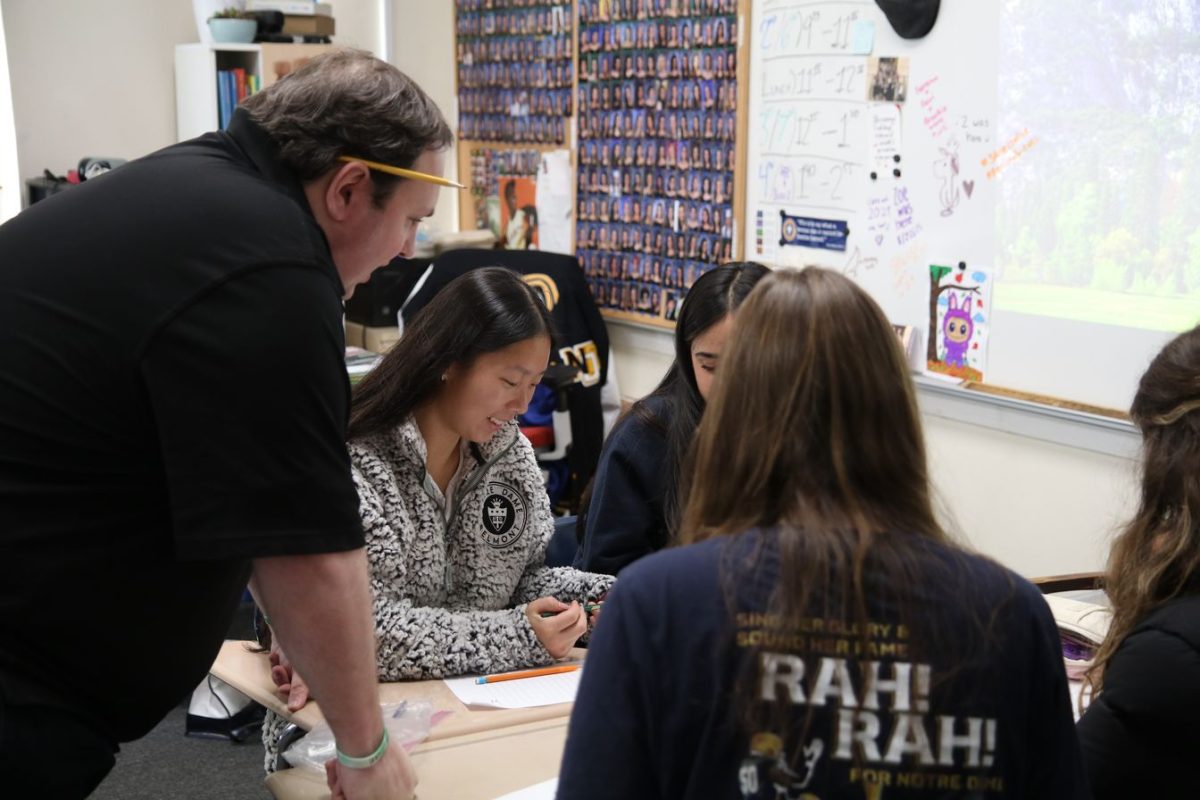
Sophomore Siena Heid shared that her MacBook came from her mother’s teaching job, and she values its reliability. “We’re doing almost all of our homework and school work on a computer, so it needs to be reliable,” Heid says. When teachers themselves use MacBooks, it reinforces the expectation that students will follow suit. Junior Roxie Hanni noted that while everyone has one, those who don’t sometimes face technical difficulties.
This makes one wonder, is there an unspoken pressure in schools to own this premium product? When the majority of peers and teachers use the same device, it creates a cultural norm that can feel like a necessity rather than a choice.
MacBooks are expensive, often ranging from $1,000 to $2,000. “I think it could be cheaper,” Hanni says. Students recognise this. Yet despite the price continue to buy them. Why? Because reliability, brand trust, and cultural acceptance outweigh the financial burden. In a world where homework, communication and even social life depend on technology, the cost becomes justified, or at least tolerated.
There’s also a subtle social dimension. Just as iPhones dominate teenage culture, MacBooks carry a certain prestige. “It’s the same as saying, oh my God, you have an Android, not an Apple,” Hanni says. While students insist no one is “left out”, the reality is that owning a different laptop can make collaboration harder and may even mark someone as “different”.
Ultimately, the dominance of MacBooks in classrooms can be explained by numerous reasons. The most important part remains the accessibility and reliability of a computer, and this needs to be in line with the price. The question that remains is: Is this the case for MacBooks?