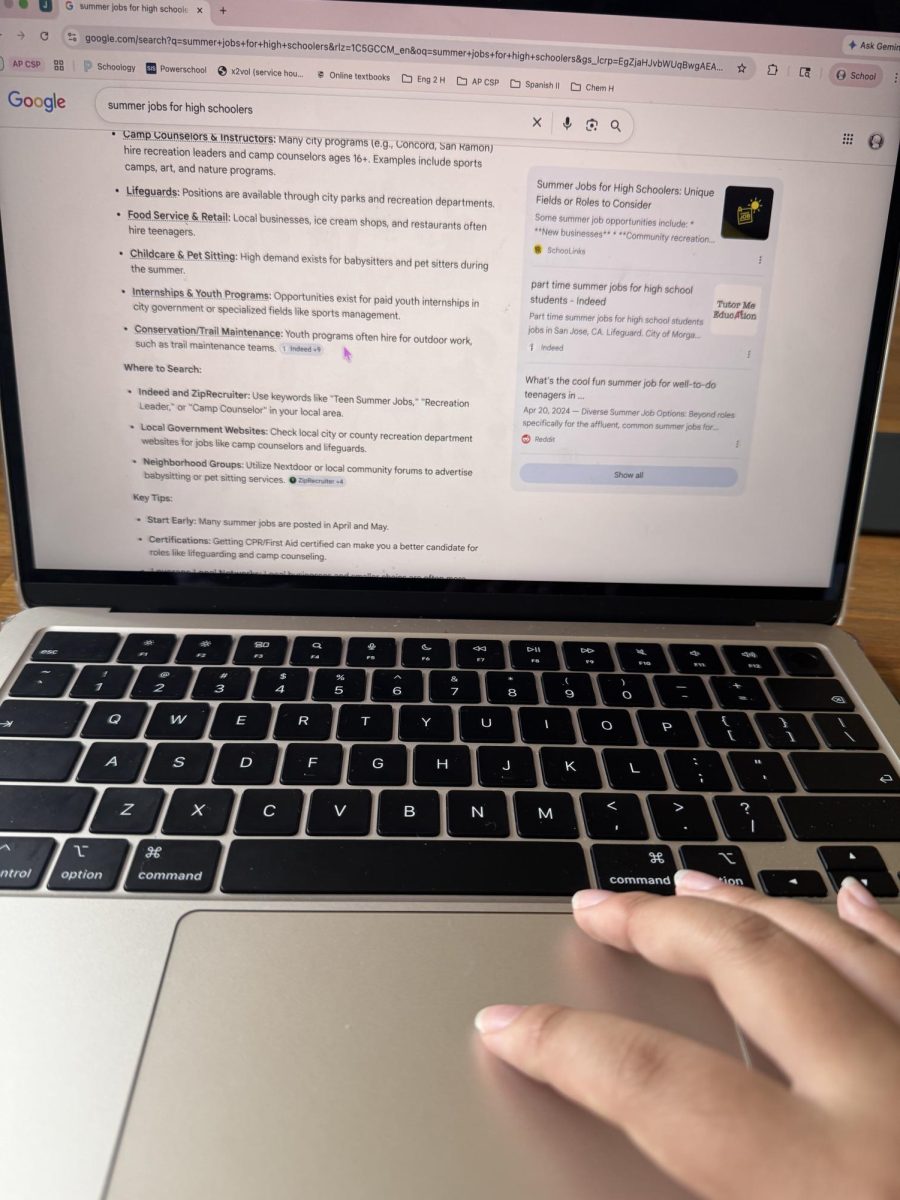
For many high school students, the school day doesn’t end when the last bell rings during block 4. Instead, it marks the beginning of another shift, starting just shortly after school. Between rigorous classes, homework, extracurriculars, and part-time jobs, some students are essentially working a 12-hour day. From a rigorous 6-hour school schedule and another 4-6 hours at work, there is little to no time for rest.
While many students take on jobs to save for future college expenses, others are driven by a desire for immediate financial independence. This early entry into the workforce allows teens to transition from being consumers to active contributors to their local economies. Whether they are saving for a first car or simply looking for “spending money” to use with friends, the sense of pride that comes from earning a paycheck is a powerful motivator that often offsets the exhaustion of a long school day.
The reality is that many students are juggling responsibilities that mirror full-time adult workloads. While working teaches responsibilities, time management, and independence, it can also lead to stress and burnout if not carefully balanced and organized. Sleep, social time and mental health can easily and slowly take a back seat.
“I work at Coconut Bay, a Thai restaurant in Burlingame. I am a hostess there a couple of times a week. I like working to earn money, especially as a senior, since there are tons of events happening where I need to pay for new clothes or shoes, excursions or whatever expenses are needed. It does make me very busy, and forces me to work on my time management, which can be both a good and bad thing,” shared Senior Georgia Melvin.
Balancing these work shifts and rigorous school days can be overwhelming. However, NDB provides additional academic resources, offers flexible deadlines when appropriate and discussed, and continues to emphasize mental health support to ease pressure.
As student employment becomes more common, the role of educational institutions is evolving. Schools that acknowledge the heavy lifting their students do outside of campus can create a more inclusive environment by offering flexible office hours or asynchronous learning options. When teachers and administrators view a student’s job as a significant life commitment, it fosters a partnership that helps the student succeed both in the classroom and at the workplace.
The long-term impact of balancing work and school often manifests as greater resilience. Students who successfully navigate these competing demands early on often enter adulthood with a more realistic understanding of time management. While the short-term cost may be a few lost hours of sleep, the long-term gain is a robust work ethic and a distinguishable level of maturity.
More students are taking on jobs during the school year; their stories highlight both resilience and the need for support. Behind every after-school shift is a student working hard for both a paycheck and for their future.