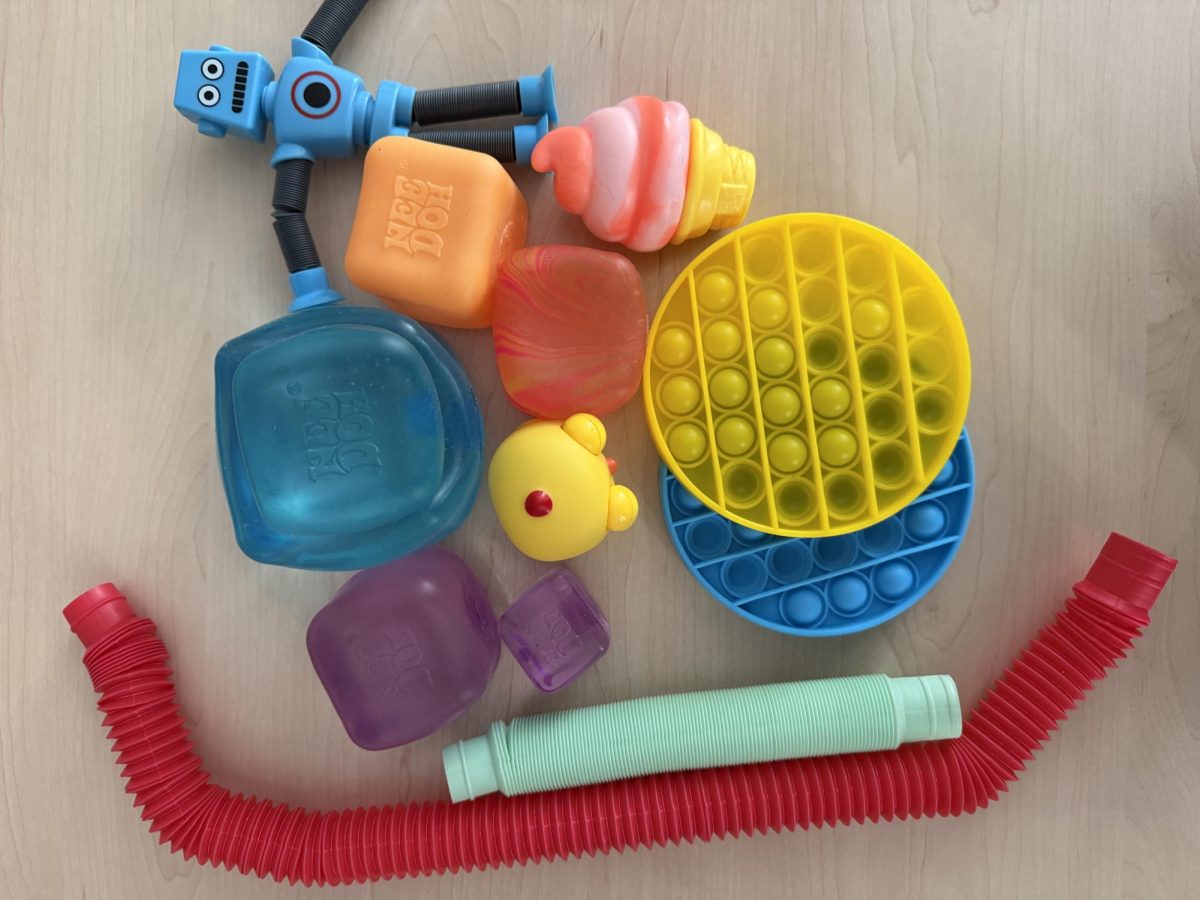
In classrooms across the country, small gadgets designed to help students concentrate are becoming increasingly common. Fidget toys, such as spinners, clubs and textured blocks, have grown from a niche tool often associated with students who have attention challenges into a widespread trend among high schoolers. As their popularity rises, many schools are debating whether they should create official policies and regulate their use in class.
Fidget toys are often promoted as tools that help students stay focused. The idea is simple: by keeping the hands busy with repetitive, low-effort activity, students can maintain attention on a lesson rather than becoming restless or distracted.
Counselor Allan Gargaritano shared a balanced perspective on whether schools like NDB should have rules about fidget toys.
This view reflects a growing sentiment among staff members: fidget toys can be beneficial, but their use should be thoughtful and controlled.
Originally, fidget toys were most commonly used as support tools for students with conditions such as ADHD or anxiety, helping them manage restlessness and improve concentration. However, in recent years, they have become widely marketed and popularized on social media. As a result, many students now carry colorful, creative versions of these toys, even if they do not necessarily use them for focus purposes.
The growing variety of fidgets has contributed to concerns among teachers and administrators. While some are nearly silent and discreet, others click, spin, pop or even light up. In a classroom environment where attention is already divided among dozenz of students, even small noises or visual distractions can pull focus away from learning.
Students themselves recognize this downside. When asked whether fidgeting helps with focus or creates distractions, senior Kylie Fernandez stated, “Both, I know that students do benefit from them, but as they are getting more and more popular, people have different kinds and colors, so they can become a distraction at that point.”
Because of this dual impact, many schools are considering guidelines rather than outright bans. Some teachers allow only silent fidget toys, while others require students to keep them out of sight or use them only during certain activities. As fidget toys continue to grow in popularity, schools like NDB may increasingly look for policies that support students who benefit from them while minimizing distraction for everyone else.