Notable alumni: NDB graduates making their mark

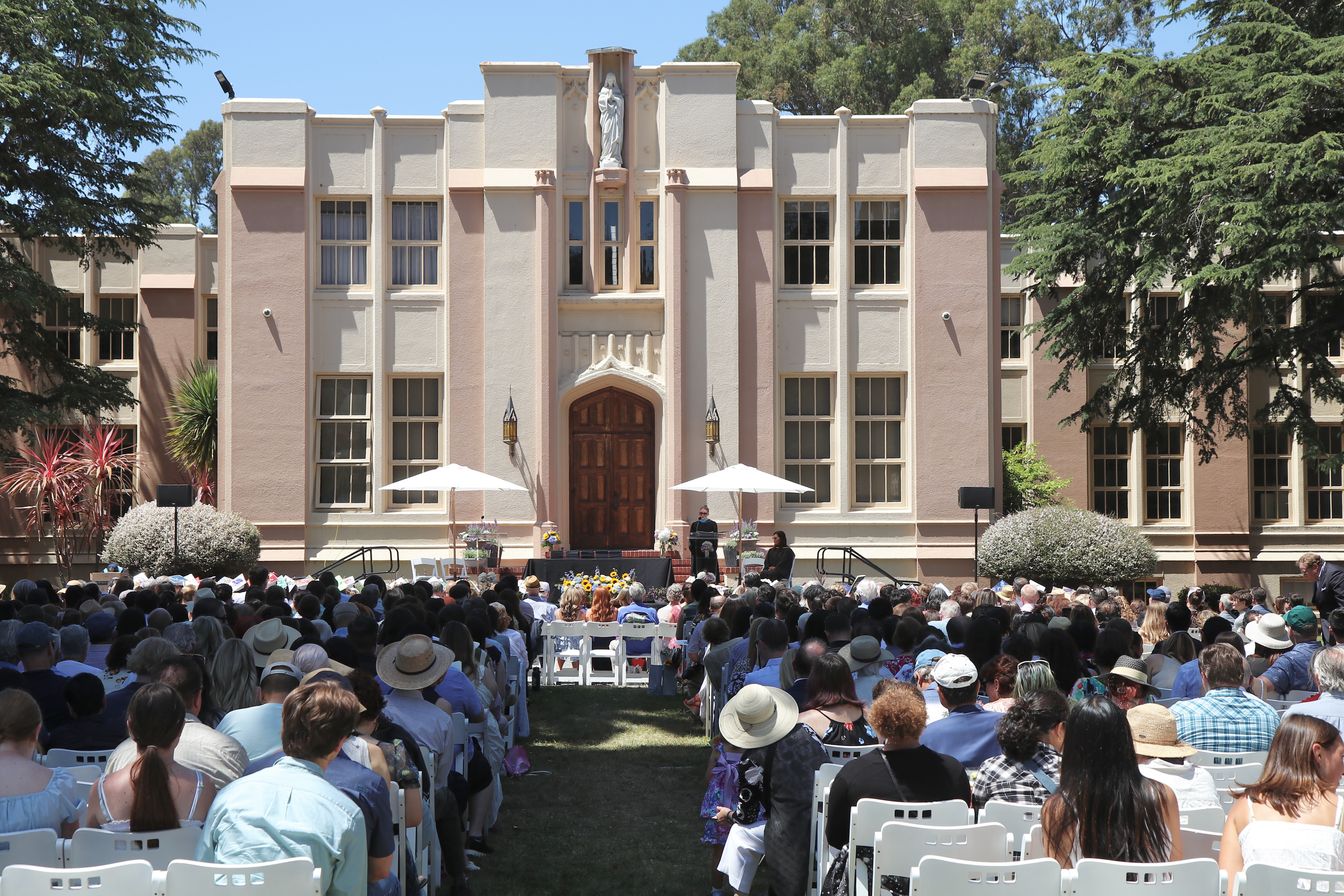
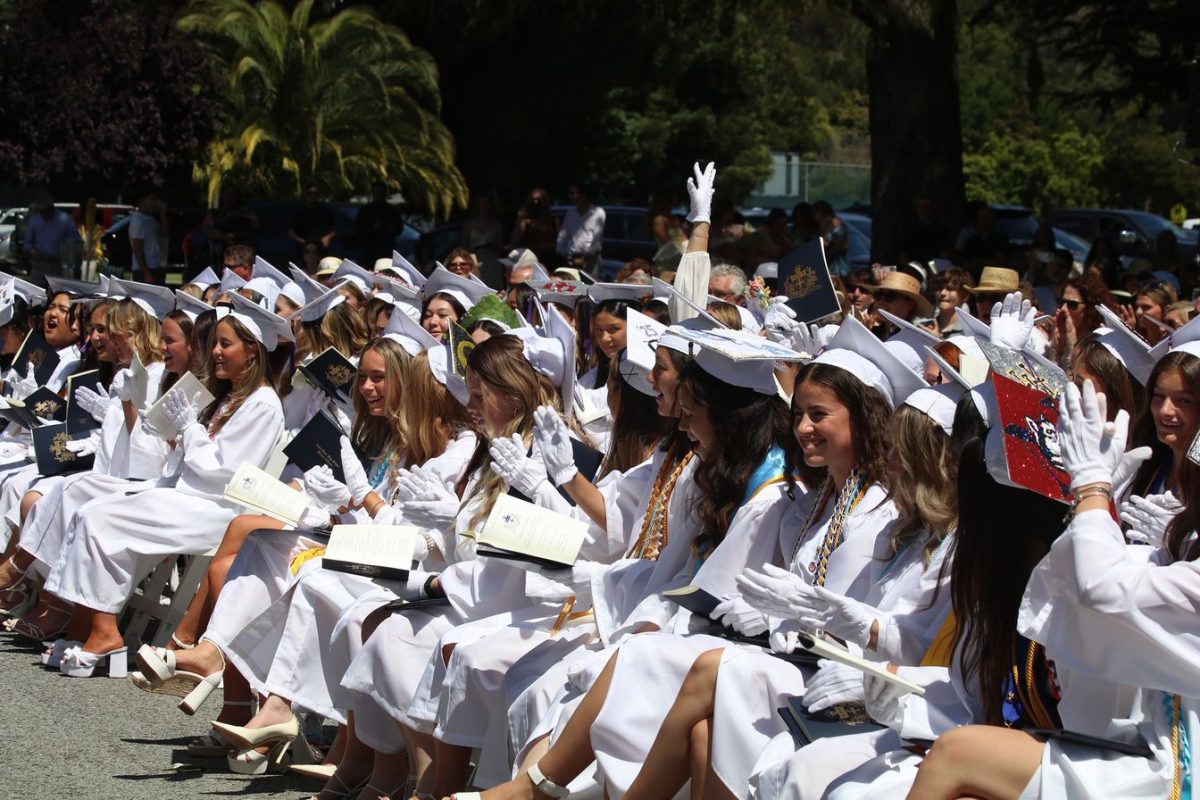
At Notre Dame Belmont, the learning experience is built on more than just academics — it’s rooted in faith, community and the belief that every student is called to grow with purpose. Students are challenged to think critically, lead with compassion, and serve others with intention, creating a foundation that extends far beyond the classroom.
A Notre Dame student has a distinct presence: priding herself on academic and extracurricular excellence while still committing to bettering the world around her. This environment doesn’t just shape what students know, but who they become.
Long after graduation, alumni carry these values with them, sharing stories of how their time at Notre Dame Belmont continues to influence their choices, their relationships, and their commitment to making a meaningful impact in the world.
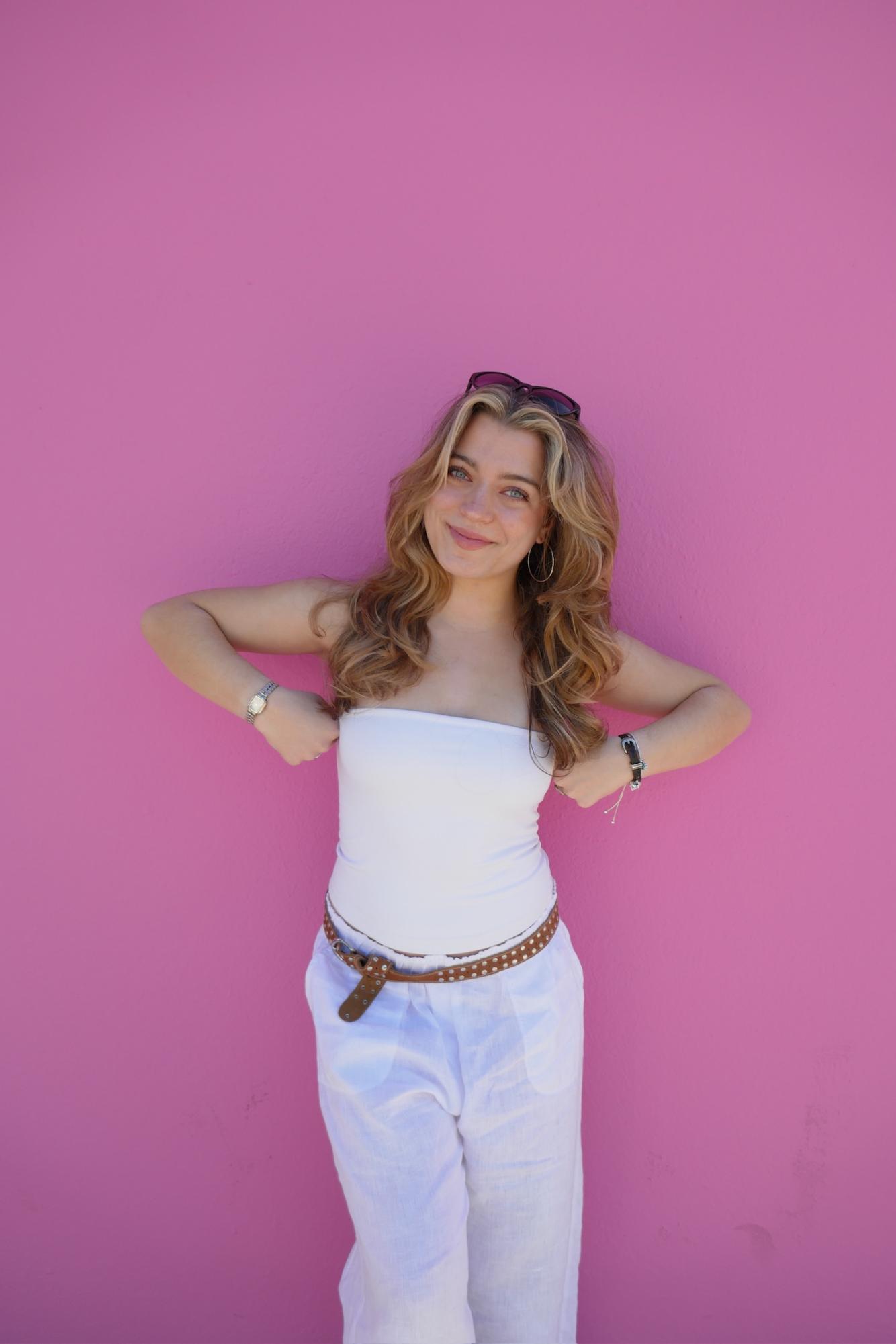
Sianna Kiebler ‘25 is a freshman at the University of California, Los Angeles, where she is pursuing a Theater major with an emphasis in acting. She recently landed a coveted lead role in a UCLA graduate-directed department show and is actively participating in ballroom and hip-hop dance classes, costume design workshops and community projects.
At NDB, Kiebler was deeply involved in Tri-School Productions, the Ambassador Board, Aquacades and the Rainbow Club, always stepping in to support her school community.
The Catalyst (TC): What kind of activities were you involved in at NDB? What activities are you involved in now, at UCLA?
Sianna Kiebler (SK): At Notre Dame, I was super involved with Tri-School Productions and Ambassador Board…I was [usually] in Aquacades, and anywhere that [NDB] needed me. I was involved in the Rainbow Club, which I thought was always super fun.
My major currently is Theater, with an emphasis in acting … I would say that Notre Dame made it possible for me to get into [UCLA] specifically to pursue my passion.
I am currently in a ballroom dance club and hip-hop classes, which has been super fun, to be able to really explore non-standard dance. I also am about to be in a UCLA department show, which is crazy … working with the graduate students who are directing it. We get funded directly by UCLA, and I get to work in the space … it’s pretty much a firsthand look into the student and professional world. It’s this weird mix, so I’m very excited. I also am working in the costume shop, so I am helping make costumes for the shows. Or, I’m sewing bears to give to the kids at the [local] Ronald Reagan hospital … you know, little projects sometimes. I’m learning a lot.
TC: What do you miss most about your Notre Dame experience?
“I really miss the sisterhood … I kind of miss the atmosphere in the halls … knowing everyone, being able to talk to anyone, even just staff members. Notre Dame, I think, did a really good job of making sure that you didn’t have to look hard to get help. I miss my girls! I miss the relationships I had with my teachers, and knowing the silly things they do in their personal lives.”
TC: How do you think the all-girls experience prepared you for the transition to college?
SK: I think the all-girls experience definitely gave me confidence – even if I don’t get something now, I will learn it. It gave me the confidence to speak up in class. I think also the standard that [NDB] holds you at, as hard as it is in high school, it helps. Now in college, I mean, things are still hard, but I’m flying through. I feel so much more well-prepared to even approach a problem, even if I don’t get it yet. Notre Dame definitely holds you at a higher standard so that you are successful in your classes, or can learn how to be.
TC: What was the biggest change you had to make during your transition?
“In college, I actually am learning how to balance slowing down while still being ambitious, which was very different in high school. In high school, I wanted to do everything all the time, which really isn’t sustainable in the long term. I think college has given me the gift to say, ‘you can still be successful, but you also need to take care of yourself.’”
SK: The transition, I think, was the hardest thing for me. I’m not going to tell anyone that it was easy. It’s worth it, but it’s not easy, at least for me. I’ve always gone to small schools. [But] what I found so nice is that it’s like a town rather than a school. And then in your classes, you’ll meet people, and then all of a sudden, you’re going to lunch together, and then you make your own groups. I had to get used to not knowing everyone in the space. I think that was really hard for me, because I was so used to knowing every single person’s name, or at least what group they’re part of. Like, I used to know people, and now, I have to reintroduce myself every quarter to teachers and to people in my class. So I think I had to learn that new doesn’t mean dangerous, it just means new.
TC: How have you found time to balance all of your activities?
SK: To be honest, I’m still learning. I think I will always be learning. I think for me, [I had to learn to] be honest and say to myself, ‘You know what, I really have to do this, but I really don’t want to. But right now, I’m going to make time tomorrow for me to complete this project.’ I have to be really honest about deadlines, and you have to stay on top of deadlines. I think just staying proactive is the best [academic] advice that I can give, but then also scheduling time to hang out with friends, and to sleep.
TC: How has it been making friends in college?
SK: I know everyone has different experiences, but I’ve been insanely lucky with friendships at UCLA, almost instantaneously. My two roommates – they’re basically like built-in best friends. The nice thing about UCLA is there’s always someone else to turn to. You can always find a group of friends … you’re going to find your people.
TC: Do you have a specific NDB staff member that you miss?
SK: I don’t think I could ever say specifically one favorite, because, seriously, Notre Dame teachers are awesome. They all have their own quirks and their own personalities. I will say that I really, really miss the admissions board, like Mrs. Anderson and Kari. I miss Mrs. Essalat and Mrs. Breazeale … they all do a really good job of keeping [NDB] together. The teachers … Mr. Rojas, Mr. Tomczak, and Mrs. Connolly … the counseling services … I can’t even list them. I genuinely just miss all of the staffulty. They are so incredible and so dedicated to us students.
TC: What’s been your favorite memory from the start of 2026?
SK: It was after my first midterm. I was taking a Western civilizations history class. And I’ll be so honest – I thought I bombed the midterm. I ended up being just fine in the end, but I did not feel confident about it at all. I was kind of heartbroken, because, you know, you always expect a lot of yourself.
There’s a sculpture garden right by the [testing] building, but I ended up just plopping down with my backpack and a snack … it was sunny and it was warm, and I was just like, looking at everything, and I just … kind of had this realization, you’re fine. Like, it’s … your first time here, you’re doing great. And I had kind of this moment of just, like, mercy for myself. Like you can fail. You’re going to fail, like, give yourself that grace and look at this beautiful place you are in, like you are here for a reason. And that just totally comforted me.
I think that’s probably one of my favorite memories.
TC: Do you have any advice for Notre Dame students who are preparing to leave for college?
SK: I just want to say, it can be so scary. But let yourself be scared. Let yourself not understand things and be confused. I wish I had just given myself the grace to not know stuff, and to [not question myself]. You’ll figure it out. You always will. My biggest [piece of advice] is, give yourself grace, especially when you’re starting this new chapter.
Her experiences in high school helped build the confidence, creativity, and leadership skills that continue to drive her success at UCLA. Kiebler, known by teachers and classmates as a caring and passionate individual, has made her mark on NDB and continues to do so in her own community.
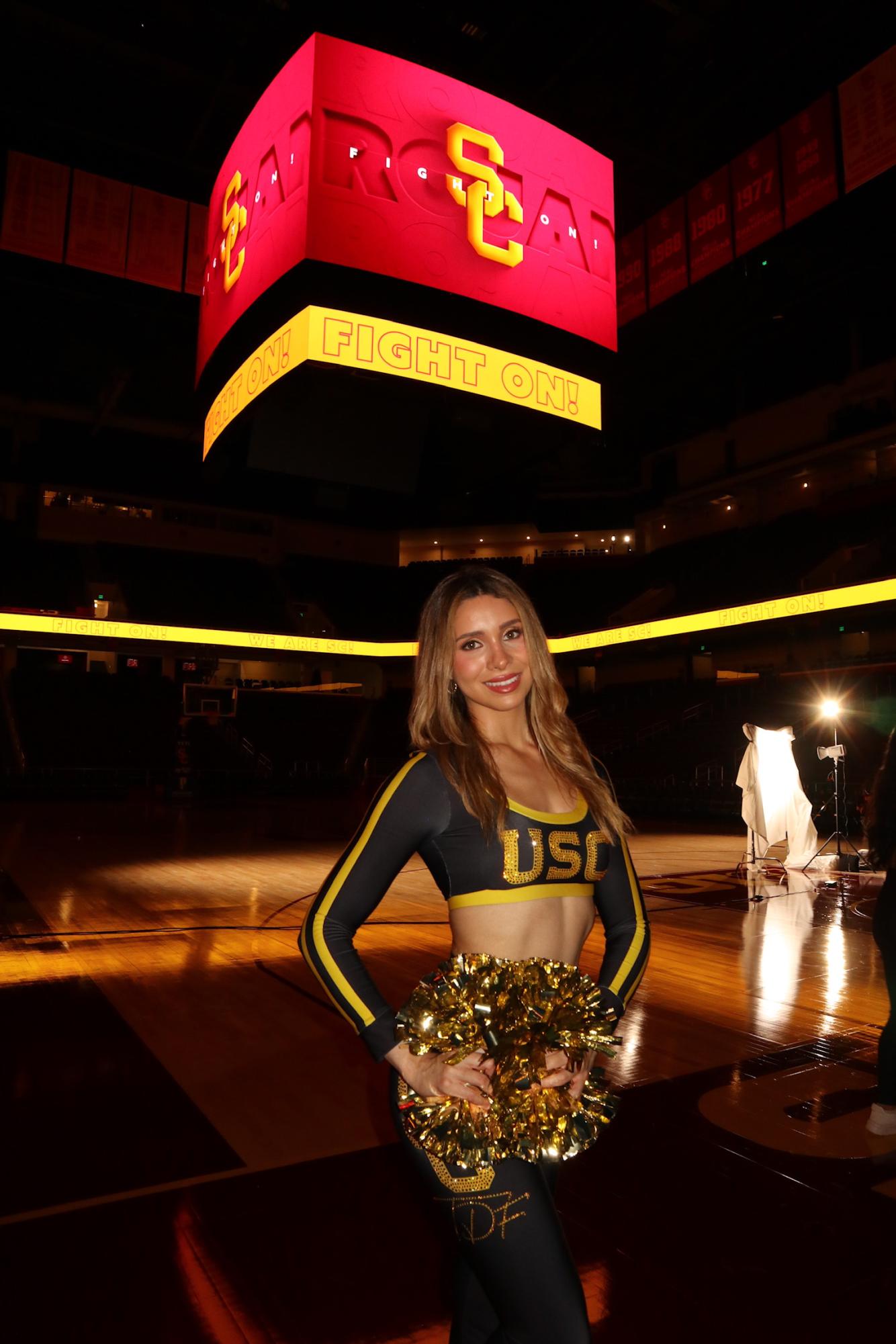
Ava Marinos ’23 is a junior at the University of Southern California, majoring in Business Analytics with a minor in AI. At USC, Marinos has thrived both academically and socially, balancing her studies with involvement in the Trojan Dance Force and her sorority, where she enjoys community service and sisterhood.
A passionate coder and dancer, Ava discovered her love for teamwork and performance at NDB, competing on Varsity Pom and InStep.
The Catalyst (TC): How has your college experience been so far?
Ava Marinos (AM): I loved my experience at USC … it’s been my top school ever since I was little, so it’s still a dream that I go here, and I’m super involved in a wide range of things. I’m on the dance team at USC, and I’m also in a sorority now, which has been awesome to be part of an all-girls community. I’ve kind of been missing that aspect from Notre Dame, so to relive that all-girls experience in college is awesome. And I’m also doing lots of classes that I love – all coding and business … I’m a Business Analytics major, and I have a minor in AI, so I do lots of coding, and it’s what I love to do.
TC: What has your favorite part about college been?
AM: I think the sense of independence that you have, being in college. I mean, that can seem like a difficult thing to do, especially transitioning from high school to college … you kind of just have to hold yourself accountable. But I just love this sense of independence where you can do whatever you want, you can join any club you want. There are so many opportunities on campus to just be a part of an organization, be part of something that you’re passionate about. Especially at USC, there’s just so many opportunities to do that … being in LA has been really cool. Like you can venture out and go to really nice, different cities. I love living in LA – it’s been awesome.’ [USC] is just so spirited as well, which I love … I mean, [for football games], everyone’s decked out and like, people literally paint their bodies red. It’s huge.
TC: What was the transition from high school to college like?
AM: I mean, the classes are obviously a lot – definitely very hard at USC and competitive, especially the program I’m in. But I would say the transition to … living on your own and dealing with homesickness … was more difficult. I wouldn’t say it was like ‘Oh my gosh, this is so hard,’ though, because your advisor helps with your curriculum and ensures that you’re not starting off too hard … You’re not in the deep end right away with your curriculum. [What’s more tricky is] navigating through life on your own … like doing certain things on your own, learning to live with other people. I would say it was definitely a transition, but it was such a cool experience, because I’m still best friends with my roommate from freshman year.
TC: How do high school friendships compare to college friendships?
AM: You become so close to people. You meet someone new every week or every day. Obviously, everyone in high school, everyone’s from the same area – we’re all from the Bay Area. But people that you meet here are from all these diverse places … we have such a diverse student body here at USC. We have people that are international, people from the other side of the country, and so on.
It’s so cool being friends with people; you will never be around as many people who are from such diverse backgrounds as in college. I would say embrace that, because it’s such a cool thing to learn from so many different people, especially people in such different majors.
TC: What has your sorority experience been like?
AM: I love being [in] a sorority. I mean, I really missed prom and formal from high school, and we have a similar thing where you dress up and you go to a venue and you dance. But we also have philanthropy, and we have a cause, and we help serve the Ronald McDonald House and the LA Food Bank as well. It’s really cool to give back to the community. I loved volunteering in high school, and I’ve missed that aspect, and I really wanted to volunteer as well in college and just give back to the LA community. So that’s how I was able to stay involved.
Also, I’ve met so many cool people. I’ve never had this many friends that are in one house. It’s so cool. Every time I go to the [sorority] house, I meet someone new, because it’s pretty big. When I did recruitment, it was super fun. That’s the event that really brings the house together. We always do really cool things, like ice skating or … go-karting … I would definitely recommend joining a sorority or some kind of social organization.
TC: What kind of activities were you involved in at NDB, and how have they shaped your current interests?
AM: I was on the Varsity Pom team, and I also was on the InStep competition team. So I was on two separate dance teams, and … I just loved working with a bunch of girls. I mean, the InStep was more about doing your own choreography and competing at regional competitions, and then Varsity Pom was a very competitive team. I think [Pom] really started my passion for dancing for athletics, like dancing at the Serra football games and basketball games. I just love cheering on a team and also getting to perform, like during the quarter breaks during basketball games. It’s just so cool to cheer on a team and to be a part of sports entertainment.
TC: What’s one class that you missed most?
AM: Journalism. That was super fun, and it was really cool to just be able to write whatever you wanted and make an argument for things that people might disagree with – but it’s okay, because it’s the opinion section. I really wanted to write for the Trojan Daily, but I don’t know if that’s possible right now. But it was always a thing that I missed, because I love to write. I do so much coding right now that I don’t really get much of a chance to write as much as I did in high school, but I did love all the writing I used to do, especially like the creative realm, like with journalism.
TC: Do you have any teachers that shaped your educational journey?
AM: I still keep in contact with Mr. Rojas. He’s been amazing. He was my journalism advisor, and I had him for English every year I was at Notre Dame, so he got to see me grow in my writing and as a person. He helped with our college apps and essays … he’ll help you develop your personal statement. He really saw me grow in so many different areas, and I still keep in contact with him. He’s a great teacher. I couldn’t have asked for a better English professor or a better person to look up to. I love his class and the way he taught, and I always keep in touch with him.
I also loved Mrs. Walton. I only had her for a year, but she really pushed me in AP Calculus and motivated me when the concepts got hard. Everyone was great, though. I would say, definitely try to keep in contact with teachers after high school. It’s so nostalgic … I definitely want to come back again.
TC: What advice would you give to students on balancing academics, extracurriculars, and other activities?
AM: Especially in college, the one thing that’s held me accountable for all my assignments and deadlines, even non-academic ones, is having an Excel spreadsheet. I color-code things and categorize what I have to do – it helps me see what needs to be done in the long term and short term. It’s really helped me manage my time and allocate time for what I need to do. Once you get your syllabus, put all your dates down.
You have to figure out your priorities, because things will conflict, especially in college when you’re involved in so many activities. The more things you’re involved in, the more you have to prioritize, even relationships and friendships. You figure out what to prioritize and who is going to be in your life. You understand that fast in college.
TC: What are your plans for the future?
AM: I am actually doing my master’s program here. So I will be here for another year … I actually graduate a semester early. I graduate next semester, and then I’m here for my master’s. I think until Fall 2028.
I’m here for a bit, but after college, I definitely want to be a data scientist for any kind of firm. It can be applied in so many different ways, especially with AI growing and evolving at such a fast pace. I want to be able to apply what I know, because I code, so I want to be a data analyst or scientist for a business firm or healthcare, wherever I end up. I don’t really care what kind of industry I break into. I’ve worked for high-tech and software firms in past internships, but I’d love to apply data analysis and be a data scientist for a firm or even a startup. That’s kind of what I want to do. I want to be a coder. AI is going to progress so fast, and I really want to learn about the infrastructure behind LLMs and how to use them for making big decisions.
TC: What is one thing you believe all students should know?
AM: Don’t be so hard on yourself. Especially in high school, we’re all perfectionists, trying to get into amazing schools, earn the best grades, and have flawless applications. But it’s important to take a breath and make time for yourself, without stressing so much about where you’ll end up. Everything you’ve done in your life so far is part of your own “application,” and you’re not defined solely by the outcome.
Looking ahead, she plans to pursue a career as a data scientist, applying her skills in AI and analytics across industries, while continuing to embrace the independence, diversity and opportunities college life offers. Marinos exemplifies strong character and willingness to learn, traits that have brought her success in every field that she enters.
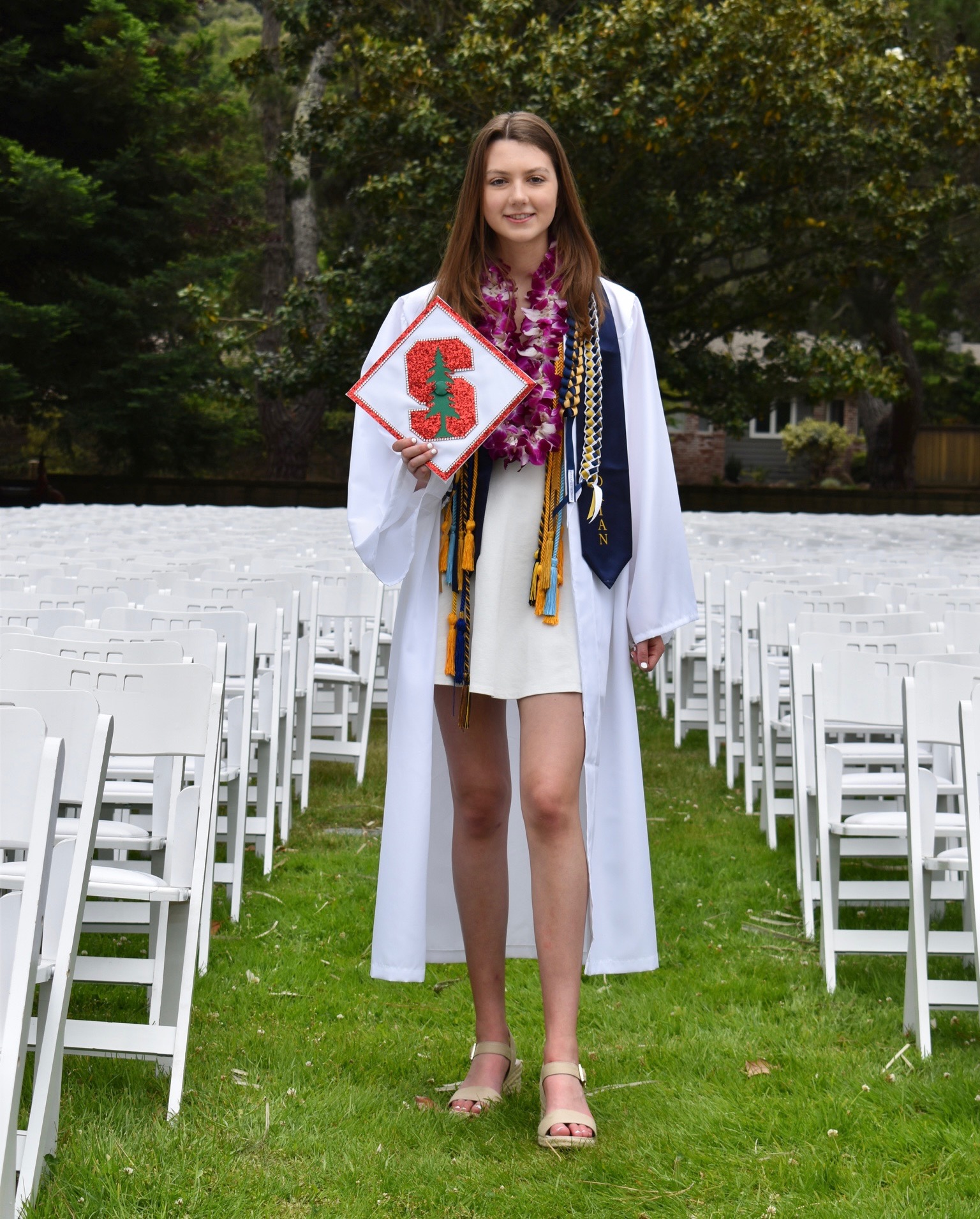
Peyton Daley ‘22 is a senior at Stanford University, where passion drives her work with earth sciences and climate technology. She currently co-leads a student-run class on sustainable agriculture, serves on the leadership team for the Alternative Protein Project, directs Stanford Climate Week and writes as an environmental journalism fellow for the Bill Lane Center.
A former Editor-in-Chief of The Catalyst, Daley also excelled in athletics: competing at the equestrian world championships and running for the varsity cross-country team. During her time at NDB, Daley was heavily involved in leadership and graduated as valedictorian of her class.
The Catalyst (TC): Which teacher or staff member had the biggest impact on you? Why?
Peyton Daley (PD): Dr. Hegarty and Mr. Rojas had the biggest impact on me. Dr. Hegarty was such an engaging teacher, and her AP Chemistry class helped build useful skills that I have taken into my college courses in climate and atmospheric science, soil and water chemistry and geoscience. I also really appreciated Mr. Rojas because of how he gave students a lot of opportunities for creativity in running The Catalyst, from coming up with story ideas to writing, editing, and designing the layout. This experience taught me a lot about leadership and management, which are skills that I’ve relied on in college, and made journalism one of my highlights of NDB.
TC: Looking back, what high school experience prepared you the most for college?
PD: I don’t think there was one experience, but I think being involved in a variety of activities prepared me for college and helped me learn how to balance academics with other interests and get involved in different opportunities on campus.
TC: How did you deal with stress or pressure in high school, and what would you tell your past self now?
PD: Having athletics as a way to break up time in the classroom and doing homework was a great outlet. Even though vaulting and cross country both came with their own challenges and stress, they provided built-in time with friends and the opportunity to focus my energy on different goals outside of school while spending time outside and exercising, which helped me relax. I would tell my past self to not stress about factors beyond my control and stay focused on what I can affect.
TC: What kind of things were you involved in throughout high school?
PD: In high school, I did equestrian vaulting and was on the NDB cross country team. I was also Editor-in-Chief of The Catalyst and President of the Journalism Club, on the NDB Marketing & Communications Board, the Notre Dame de Namur Global Climate Education Forum, the Math Team and was a Peer Tutor. Outside of school, I also did a community service project with local animal shelters.
TC: What kind of activities are you involved in now?
PD: I co-lead a student-run class on sustainable agriculture technologies and am on the leadership team for Stanford’s Alternative Protein Project, and I help direct Stanford Climate Week, which has been a really fun way to connect with other students with similar passions. This year, I also am an environmental journalism fellow for Stanford’s Bill Lane Center and write for their magazine & the West, so that has been great to keep up my journalism skills! Over the past few years, I’ve also been involved in Stanford’s Office of Sustainability and on the equestrian team.
TC: What has been your most unique or exciting college experience?
PD: One of my most unique experiences in college was when I was selected for a fellowship through Stanford’s Freeman Spogli Institute, partnering with the Institute for European Environmental Policy. I spent the summer before my junior year living in Brussels with four other friends, working at various research organizations. It was an amazing opportunity to experience a new city and culture and gain exposure to a think tank environment while contributing to policy briefs for EU Parliament Members and learning about international climate legislation.
TC: How are college classes different from high school classes?
PD: From my experience, college classes emphasize depth over breadth and are focused on real-world problem solving—for example, in a class I’m taking right now in environmental engineering, every week we are given a system to redesign for optimal energy efficiency, ranging from rethinking Texas’s electricity grid to prevent the 2021 outage to reconstructing electric vehicle battery supply chains to reduce dependencies on critical minerals. Another class I’m taking in the business school brings in founders of climate tech startups to talk about their experience in company-building and analyze business case studies in the energy sector, which is a very different structure of learning from high school, where the classes are more focused on building general foundational skills.
TC:What are your plans for after graduation?
PD: After graduating this June, I will be working as an analyst at a venture capital firm on their climate and energy team.
Her successes throughout her time at NDB and Stanford are a testament to her dedication and initiative. Daley embodies the true spirit of a Notre Dame student – a woman who impacts and inspires.
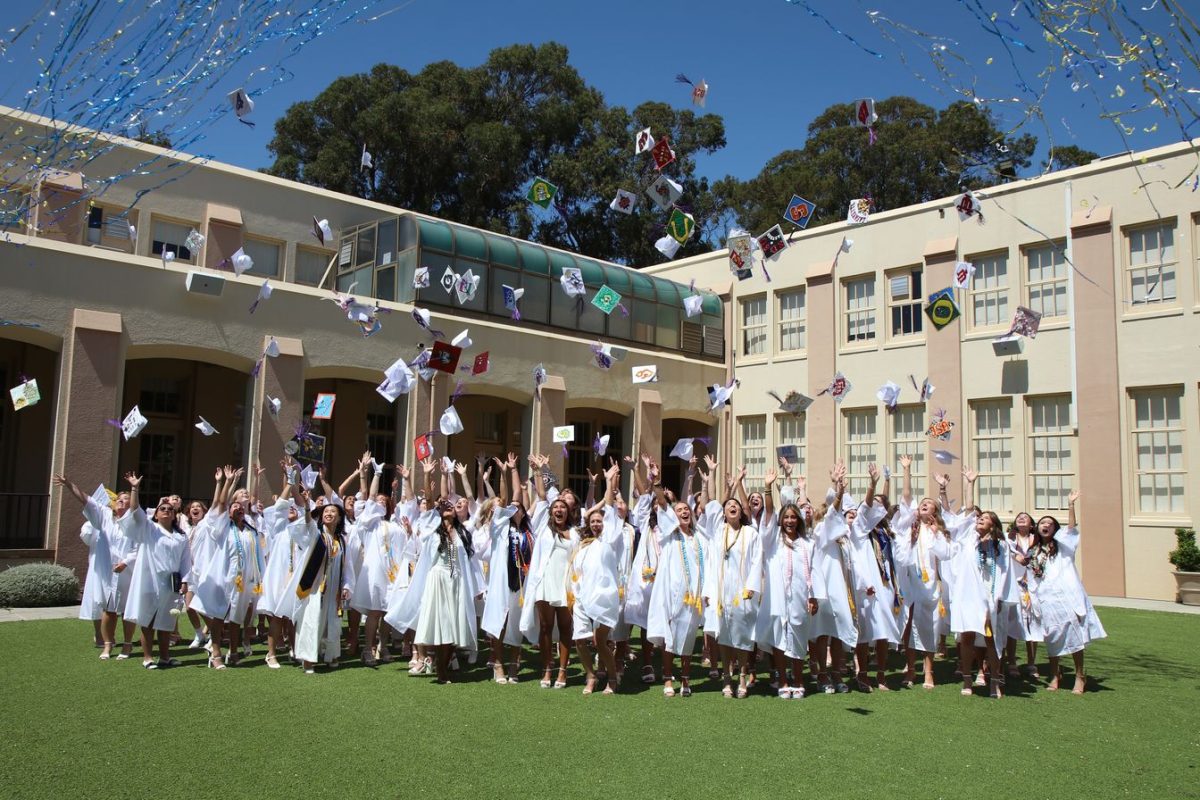
An NDB education doesn’t end at graduation — it comes to life in the paths its students choose and the impact they make. These remarkable women are demonstrative of NDB values in action, carrying forward a commitment to leadership, integrity and service in everything they do. Whether they are building communities, advocating for others, or pursuing their passions with purpose, they reflect the spirit of Notre Dame Belmont in powerful and lasting ways. Their stories are not just reflections of where they have been, but living proof of what an NDB education makes possible.
Your donation will support the student journalists of Notre Dame High School. Your contribution will allow us to purchase equipment and cover our annual website hosting costs.